
Lobuche Peak Exped

Trip Difficulty: Moderate

Trip Days:16

Max Elevation: 6090m

Daily Activity: 6-7 hours Trek

Trip Starts: Lukla

Trip Ends: Lukla
Move beyond trekking and climb a 6,000-metre summit in the Everest region
Lobuche East is where the familiar Everest trail changes character. For more than a week, the journey follows stone paths, suspension bridges and Sherpa settlements through the Khumbu. Then the trekking poles give way to crampons, an ice axe and a climbing harness. The objective is no longer a viewpoint or a base camp. It is a summit at 6,119 metres.
The mountain rises near the Khumbu Glacier, west of the main Everest Base Camp route. From the trail, Lobuche appears as a complex ridge rather than a simple snow cone. Rock, glacier and steep snow combine on the normal route, and the final climb often uses fixed lines where the angle and exposure demand more control than ordinary trekking.
This 16-day Lobuche Peak Expedition is designed for strong trekkers and developing climbers who want a genuine Himalayan mountaineering experience without committing to a long expedition peak. The approach through Namche Bazaar and Dingboche provides essential acclimatization. A training session near high camp allows the guide to check crampon movement, rope handling, harness systems and the use of an ascender before summit night.
Lobuche has two principal summits. Lobuche East, at 6,119 metres, is the commonly climbed trekking peak. Lobuche West, at approximately 6,145 metres, is a separate and substantially more technical objective. When this page refers to the Lobuche Peak Expedition, it means Lobuche East.
The term trekking peak can be misleading. It describes an administrative category, not an easy mountain. Climbers must manage thin air, freezing temperatures, a pre-dawn start, steep snow or ice, mixed ground and a long descent after the summit. The mountain is achievable for properly prepared people, but it should never be sold as a walk with equipment added for photographs.
Kudos Expeditions approaches Lobuche East as a structured climb. The summit is the goal, yet acclimatization, movement quality and turnaround discipline determine whether the attempt is responsible. Every participant must arrive with the endurance to walk consecutive days and the willingness to follow the guide’s decisions when conditions change.
Lobuche Peak Expedition at a glance
| Trip detail | Information |
| Mountain | Lobuche East |
| Region | Khumbu / Everest region, Nepal |
| Summit altitude | 6,119 m / 20,075 ft |
| Trip duration | 16 days |
| Difficulty | Challenging technical trekking peak |
| Typical daily activity | 5–7 hours on approach; longer on summit day |
| Start and finish | Lukla |
| Accommodation | Hotels, teahouses and tented high camp |
| Main acclimatization stops | Namche Bazaar and Dingboche |
| Climbing terrain | Rock, moraine, glacier and steep snow or ice |
| Core equipment | Helmet, harness, crampons, ice axe, ascender and descender |
| Main climbing seasons | Spring and autumn |
| Permit category | Lobuche East trekking-peak climbing permit plus regional entry permits |
Why climb Lobuche East?
Lobuche East occupies a useful place between high-altitude trekking and full expedition climbing. The route requires real mountaineering equipment and disciplined rope systems, yet the climb can be completed within a compact itinerary using the established Khumbu approach.
The setting adds weight to the objective. Ama Dablam dominates the lower valley, while Nuptse, Lhotse, Pumori, Cholatse, Taboche and the Everest massif appear from changing angles as the route moves higher. From the summit ridge, the Khumbu is seen as a system of glaciers and peaks rather than a line of trekking villages.
For climbers planning future objectives, Lobuche provides practical experience above 6,000 metres. It tests how the body responds to thin air, how efficiently a climber can use fixed lines, how hands function in cold gloves and whether concentration can be maintained through a long descent.
The approach also preserves the cultural experience of the Everest region. Namche Bazaar, Tengboche, Pangboche and Dingboche are not merely staging posts. They introduce the history, religion and daily logistics of the Sherpa communities that support Himalayan travel.
Expedition highlights
- Summit Lobuche East at 6,119 metres.
- Follow the classic Khumbu trail from Lukla through Namche Bazaar.
- Complete acclimatization hikes above Namche and Dingboche.
- Visit Tengboche Monastery beneath Ama Dablam.
- Train with crampons, an ice axe, harness, ascender and fixed ropes.
- Sleep at Lobuche High Camp before the summit attempt.
- Climb mixed rock, glacier and snow terrain under guide supervision.
- See Everest, Lhotse, Nuptse, Pumori, Ama Dablam, Cholatse and surrounding peaks.
- Gain practical experience for future 6,000- and 7,000-metre objectives.
- Return through the Khumbu with a planned weather and flight buffer.
Understanding Lobuche East
Lobuche East and Lobuche West are not the same climb
The Lobuche massif contains two principal summits separated by a difficult ridge. Lobuche East is the 6,119-metre trekking peak climbed by most commercial groups. Lobuche West, at roughly 6,145 metres, belongs to a different technical and permitting category.
Confusion also exists between the true summit and lower fore-summits. Conditions, route fixing and commercial practice have sometimes led teams to stop short of the highest point. The product page should state exactly what the operator considers the summit objective and how route conditions affect access.
The normal climbing route
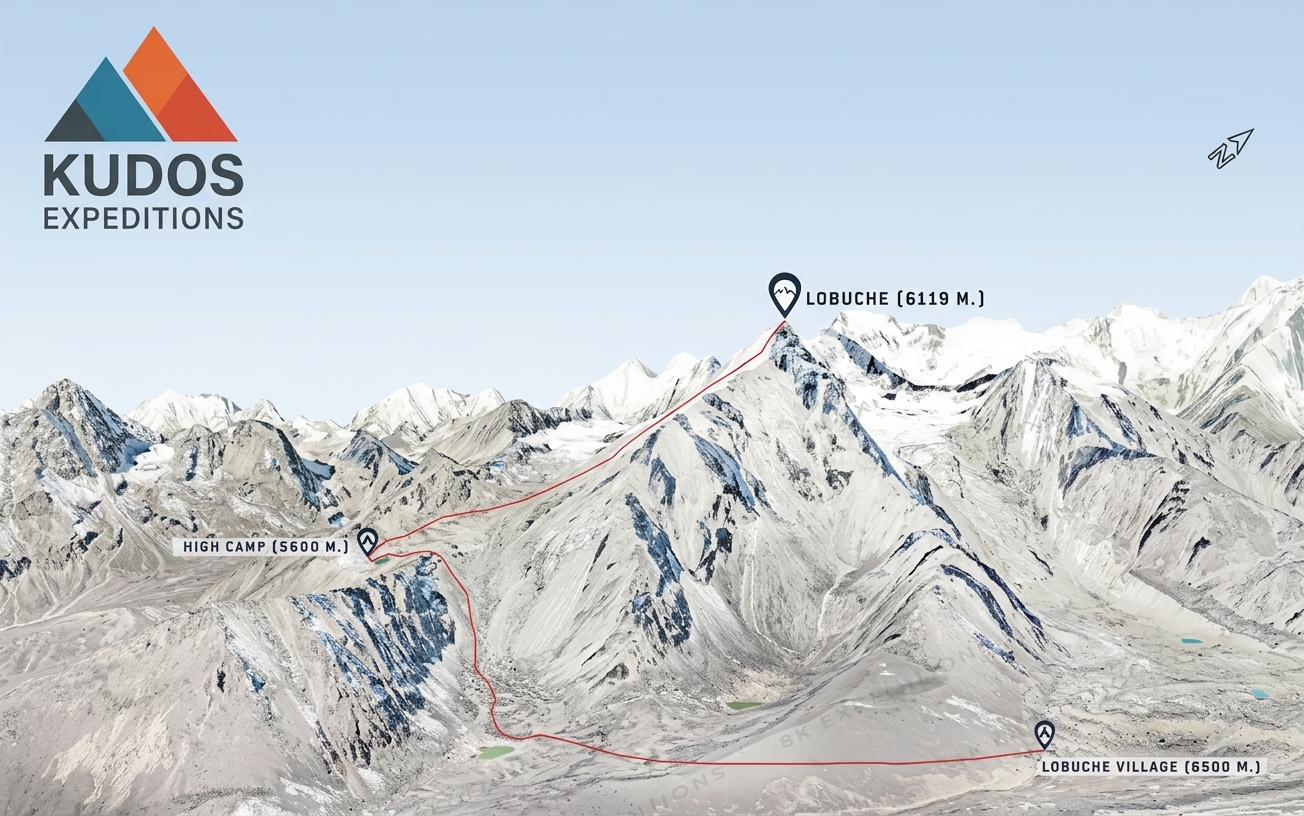
From Lobuche village, climbers leave the Everest Base Camp trail and move through moraine toward high camp. The lower mountain can be dry rock, frozen scree or snow-covered mixed ground depending on season.
Above camp, the route gains the glacier and steeper snow slopes. Fixed ropes may be installed on the upper face, where climbers use an ascender while remaining clipped to the safety system. The slope angle and surface change each season; hard ice can make a technically moderate line feel much more serious.
The summit ridge provides wide views across the Khumbu. Everest is partly framed by surrounding peaks, while Lhotse, Nuptse, Pumori, Ama Dablam, Cholatse and Makalu may be visible in suitable weather.
What summit day feels like
Summit morning is cold, dark and slow. Dressing, eating and putting on equipment can take longer than expected at high camp. Gloves reduce dexterity, boots feel heavy and simple tasks require attention.
The first hours are about conserving energy. A climber who moves too fast before sunrise may have little reserve for the upper slope. Guides generally prefer a rhythm that feels almost restrained.
Technical sections add mental load. Each transition—putting on crampons, tying into the rope, clipping an ascender or changing to descent mode—must be completed without losing gloves, dropping equipment or blocking the team.
The summit is the midpoint. Cold, dehydration and reduced concentration make the descent a significant part of the climb. Turnaround times exist to preserve enough daylight and energy for a safe return.
Difficulty and Required Experience
How hard is Lobuche East?
Lobuche East is challenging. It is less technical than major expedition peaks, but it is substantially harder than trekking to Everest Base Camp.
Altitude is the largest multiplier. Above 6,000 metres, movement slows and recovery between steps becomes limited. The summit push follows many days of trekking, so accumulated fatigue matters.
The route may include exposed scrambling, glacier travel and steep fixed-line sections. Snow quality can change from supportive steps to hard ice or deep unconsolidated snow. A grade printed on a website cannot describe every season.
Who should join?
- Strong trekkers who have completed several multi-day mountain journeys.
- Climbers with previous crampon and ice-axe experience, or highly fit beginners who complete pre-trip skills training.
- People comfortable following strict guide instructions and turnaround decisions.
- Participants able to carry a 7–10 kg daypack for long mountain days.
- Travellers with insurance that specifically covers climbing to at least 6,119 metres.
Who should choose another trip first?
A person with no hill fitness, no experience of consecutive trekking days, uncontrolled medical conditions or strong anxiety around exposure should begin with a trek or a less demanding skills course. Island Peak may be presented as an alternative, but it is also a serious 6,000-metre climb and should not be treated as an automatic easy option.
Acclimatization and Health
The itinerary uses two established acclimatization centres: Namche Bazaar and Dingboche. Day hikes above both villages expose the body to higher elevation while allowing sleep at a lower point.
Acute mountain sickness can begin with headache, nausea, dizziness, poor appetite, disturbed sleep or unusual fatigue. Worsening symptoms require a stop in ascent. Confusion, loss of coordination, breathlessness at rest or a wet cough are emergency signs.
High fitness does not prevent altitude illness. Strong athletes sometimes create additional risk by moving too quickly. The guide’s pace may feel conservative because it is designed around acclimatization rather than competition.
Hydration and nutrition support acclimatization. The dry Khumbu air increases fluid loss, while altitude can suppress appetite. Warm drinks, soup, rice, potatoes, noodles and other carbohydrate-rich food are often easier to tolerate.
Training for Lobuche Peak
Build endurance, not just speed
Train for at least ten to twelve weeks. The main goal is the ability to walk uphill for several hours, recover overnight and repeat the effort.
Weekly training components
- One long hill hike with a weighted daypack.
- Two steady aerobic sessions such as running, cycling, stair climbing or inclined treadmill walking.
- Two strength sessions focused on step-ups, squats, lunges, calf raises, posterior-chain work and core stability.
- One shorter technical session when snow, climbing walls or a mountaineering course is available.
- At least one complete recovery day.
Practice the equipment
Climbers should know how to fit crampons, walk without catching points on clothing, use an ice axe, wear a harness over layers and operate an ascender with gloves. Pre-trip instruction from a qualified guide is strongly recommended.
Back-to-back mountain days
During the final month, complete consecutive hiking days. Summit success depends less on one impressive workout than on retaining useful energy after a week of movement.
Best Seasons and Weather
Spring: March to May
Spring generally offers warmer daytime conditions and an active climbing season throughout the Everest region. Snow coverage may improve crampon travel, but late storms and warm afternoon instability remain possible.
Autumn: September to November
Autumn commonly brings dry air and clear views after the monsoon. Nights are cold, and hard snow or ice can make upper slopes more technical than their appearance suggests.
Winter and monsoon
Winter can produce severe cold and wind, while monsoon weather brings cloud, precipitation and difficult flights. Specialist private climbs may operate, but these periods are not the standard recommendation for most clients.
Summit forecasts
The team evaluates wind, snowfall, temperature and cloud development rather than relying on a single generic weather icon. Forecasts are decision tools, not guarantees. Current conditions on the mountain remain decisive.
Accommodation, Food and Expedition Life
Teahouses on the approach
The approach uses teahouses with simple twin rooms, shared bathrooms and communal dining areas. Rooms are generally unheated. Charging, showers and Wi-Fi often cost extra and become less dependable at higher elevations.
High camp
High camp is functional. Climbers sleep in tents, eat simple meals and organise equipment in confined space. Water must be carried or melted, and sleep may be interrupted by altitude, cold and the early summit schedule.
Food
Dal bhat, noodles, soup, potatoes, rice, pasta, eggs, porridge and bread form the core of teahouse menus. During the climbing phase, familiar snacks and easy-to-digest carbohydrates are more valuable than experimental sports products.
Water
Use boiled or properly treated water in reusable bottles. Insulated bottle covers help prevent freezing at high camp. Start summit day hydrated because drinking becomes harder once gloves, ropes and cold are involved.
Permits and Logistics
Required permissions
- Lobuche East climbing permit under the current trekking-peak system.
- Sagarmatha National Park entry permit.
- Khumbu Pasang Lhamu Rural Municipality entry or trek-card requirement.
- Any current expedition registration, liaison or waste-deposit documentation required by the issuing authority.
Permit fees and administrative procedures can change. The live page should avoid hard-coding outdated amounts unless the values are reviewed every season.
Lukla and Ramechhap flights
During busy periods, many Lukla flights operate from Ramechhap rather than Kathmandu. This involves an early road transfer and may require schedule changes. Weather delays are common enough that every climber should keep contingency time after returning from the mountain.
Insurance and rescue
Insurance must cover technical mountaineering to at least 6,119 metres, helicopter evacuation and medical treatment. A trekking-only policy may exclude rope use or summit climbing. Rescue flights depend on weather, location and insurer approval.
Technical Equipment
Personal climbing gear
- Mountaineering boots suitable for expected temperatures.
- Compatible 10- or 12-point crampons.
- Climbing helmet.
- Sit harness.
- General mountaineering ice axe.
- Handled ascender with safety attachment.
- Belay or descent device.
- Locking and non-locking carabiners.
- Prusik loops or mechanical backup specified by the guide.
- Climbing gloves and spare warm gloves.
- Headlamp with spare batteries.
Trekking and cold-weather gear
- Down jacket and waterproof shell.
- Thermal base layers and insulating mid-layers.
- Waterproof trousers or climbing salopettes.
- Warm hat, balaclava and neck gaiter.
- Category 4 glacier sunglasses and ski goggles.
- Sleeping bag appropriate for very cold high-camp nights.
- Trekking poles.
- 30–40 litre climbing pack.
- Two insulated water bottles or bottle plus thermos.
Group equipment
Fixed ropes, snow stakes, ice screws, anchors, tents, cooking equipment, first-aid supplies, communications and emergency systems are arranged according to the expedition plan. The guide decides which protection is appropriate for current conditions.
Safety and Responsible Climbing
Turnaround rules
A climber may be required to turn around because of time, weather, pace, equipment problems or health. Reaching the summit does not override the need to descend safely.
Fixed-line discipline
Remain clipped as instructed, maintain spacing and do not overtake on steep sections without guide approval. Rope systems only work when climbers use them correctly.
Cold injury prevention
Protect fingers, toes and face before numbness becomes severe. Wet gloves and tight boots increase risk. Report persistent cold immediately.
Waste and camp conduct
Carry personal waste as directed, use designated toilet systems and avoid leaving damaged equipment or packaging at high camp.
Respect for local communities
The approach passes working villages, monasteries and porter routes. Give way to loaded porters and animals, dress respectfully and ask before photographing people.
Why Climb with Kudos Expeditions?
A 6,000-metre climb depends on decisions that cannot be automated into a fixed itinerary. The guide must judge pace, symptoms, snow conditions, rope systems and the timing of descent.
Kudos Expeditions combines the established teahouse approach through the Khumbu with a focused climbing phase at Lobuche. Permits, domestic flights, porter support, high-camp logistics and technical equipment arrangements are coordinated as one program.
Before summit day, the climbing guide inspects personal equipment and observes each participant during skills practice. A climber who cannot use the systems safely may need additional training or may be asked not to continue.
The company should publish clear guide-to-client ratios, oxygen and communication arrangements, camp services and true-summit policy in the booking terms. Specific operational detail builds more trust than generic claims about success.
Frequently Asked Questions
How technical is Lobuche Peak compared to Island Peak or Mera Peak?
Lobuche East is noticeably more technical than Mera Peak. It involves a steep, sustained 45-degree snow and ice slope leading to the summit ridge. You must be comfortable using a jumar on fixed lines and rappelling. Ang provides hands-on training to refresh these skills.
Is Lobuche Peak a good preparation for Mount Everest?
Yes, it is highly recommended. Many elite climbers use Lobuche Peak for high-altitude acclimatization before heading to Everest. It allows climbers to adapt to 6,100m while avoiding early rotations through the dangerous Khumbu Icefall.
Can I combine Lobuche Peak with the EBC Trek?
Absolutely. It is the ideal itinerary. Trekking to Everest Base Camp and Kala Patthar first provides the perfect altitude acclimatization needed before tackling Lobuche Peak, drastically improving your chances of a successful summit.
Do I need previous mountaineering experience for Lobuche East?
While you don’t need to be a seasoned alpinist, basic crampon and rope skills are highly recommended alongside excellent fitness. Ang’s direct guiding model ensures you receive proper instruction and supervision during the steeper sections.
Where is the Lobuche Base Camp located?
Lobuche Base Camp is situated at about 4,950m near a hidden lake just off the main EBC trail. From there, we move to High Camp (5,400m), which positions us perfectly for an early morning alpine start to the summit.
Book the Lobuche East Peak Expedition
Lobuche East is not simply an Everest-region trek with a summit added at the end. It is a progression from village trails to high-altitude climbing, with every acclimatization day and technical rehearsal serving the final ascent.
Contact Kudos Expeditions to discuss your previous experience, available dates, equipment, guide ratio and whether the standard 16-day program or a longer EBC combination is the right plan.
Standard Lobuche Peak Exped 6119m Itinerary
Day 1
Arrival in Kathmandu
Meet the Kudos Expeditions representative at Tribhuvan International Airport and transfer to the hotel. The day is reserved for rest after international travel. Provide passport details, insurance information and emergency contacts. Personal climbing equipment can be checked informally if arrival time allows. Overnight: Hotel in KathmanduDay 2
Expedition briefing and equipment inspection
The climbing guide reviews the route, acclimatization strategy, summit-day systems and turnaround rules. Every technical item is checked: double or single mountaineering boots according to season, crampons, helmet, harness, ascender, descender, carabiners, ice axe and gloves. Missing equipment can be hired or purchased in Kathmandu. The team also confirms permits, baggage limits and the departure airport for the Lukla sector. Overnight: Hotel in Kathmandu.Day 3
Fly to Lukla and trek to Phakding
Fly to Lukla, either directly from Kathmandu or via Ramechhap depending on seasonal air-traffic arrangements. Mountain flights are weather-sensitive and should never be described as guaranteed. After meeting the porter team, descend through Chaurikharka and follow the Dudh Koshi toward Phakding. The first stage is intentionally short. Overnight: Teahouse in Phakding, around 2,610 m. Walking: roughly 3–4 hours.Day 4
Trek from Phakding to Namche Bazaar
Cross several suspension bridges and enter Sagarmatha National Park near Monjo. Beyond Jorsale, the trail follows the river before beginning the long climb to Namche Bazaar. The final ascent is a useful first test of pacing. Walk slowly, keep layers light enough to avoid excessive sweating and eat before fatigue becomes severe. Overnight: Teahouse in Namche Bazaar, around 3,440 m. Walking: approximately 6–7 hours.Day 5
Acclimatization day in Namche
Take a morning hike toward the Everest View area, Khumjung or another viewpoint selected by the guide. The purpose is to gain elevation during the day and return to sleep in Namche. The afternoon is used for recovery, hydration and health checks. Headache, nausea, poor appetite or unusual fatigue should be reported early. Overnight: Teahouse in Namche Bazaar.Day 6
Trek from Namche to Tengboche
The trail contours above the Dudh Koshi with views of Ama Dablam, Everest, Lhotse and Thamserku. It then descends to the river and climbs through forest to Tengboche. Tengboche Monastery is the major religious centre of the upper Khumbu. The setting provides one of the clearest visual introductions to Ama Dablam. Overnight: Teahouse in Tengboche, around 3,860 m. Walking: about 5–6 hours.Day 7
Trek from Tengboche to Dingboche
Descend through forest to Deboche, cross the Imja Khola and continue through Pangboche. Vegetation becomes sparse as the route enters the wider upper valley. Dingboche lies among stone-walled fields beneath the slopes of Nangkartshang. The air is noticeably thinner, and the correct walking pace may feel slow. Overnight: Teahouse in Dingboche, around 4,410 m. Walking: approximately 5–6 hours.Day 8
Acclimatization day in Dingboche
Climb partway or fully toward Nangkartshang Peak, depending on conditions and group strength. This is a demanding acclimatization hike, not a rest-day sightseeing walk. Return to Dingboche for lunch and recovery. The guide reviews oxygen saturation trends where used, appetite, sleep and any symptoms before approving the move higher. Overnight: Teahouse in Dingboche.Day 9
Trek from Dingboche to Lobuche
Climb gradually toward Dughla, then ascend the moraine past memorials dedicated to climbers and Sherpa workers who died in the Himalayas. The trail continues beside the Khumbu Glacier to Lobuche village. The settlement is exposed and cold, with limited room capacity during peak season. Overnight: Teahouse in Lobuche, around 4,910 m. Walking: approximately 5–6 hours.Day 10
Acclimatization and skills preparation near Lobuche
Use the day for a controlled hike, equipment review and climbing practice. The guide demonstrates fitting crampons, self-arrest position, ice-axe carriage, clipping fixed ropes, ascending with a jumar and descending with an appropriate device. Training is not designed to turn a novice into an independent alpinist in one afternoon. Its purpose is to make the systems familiar enough that summit-day instructions are understood immediately. Overnight: Teahouse in Lobuche.Day 11
Move to Lobuche High Camp
Leave the main trekking corridor and climb through moraine and rocky terrain toward high camp. Depending on conditions, the route may require careful scrambling before reaching the tent site. At camp, the team eats early, melts or carries water, prepares clothing in summit order and completes a final equipment check. Sleep is often light because of altitude and anticipation. Overnight: Tented high camp, commonly around 5,400–5,700 m depending on site. Walking: approximately 4–6 hours.Day 12
Summit Lobuche East and descend
Begin before dawn. The lower section may involve rock or frozen moraine before the route reaches snow and glacier terrain. Crampons and rope systems are used according to the day’s conditions. Steeper upper slopes can require fixed-line ascent. Movement must remain economical: short steps, controlled breathing and deliberate clipping. The true summit objective is 6,119 metres; operators must avoid presenting a lower fore-summit as the main summit without clear explanation. After the summit or turnaround point, descend carefully to high camp and continue lower if strength, daylight and conditions allow. The descent receives the same attention as the ascent because fatigue is highest. Overnight: High camp, Lobuche or a lower lodge according to the guide’s decision. Summit day may take 8–12 hours or more.Day 13
Contingency or recovery day; descend to Pheriche
This day provides flexibility for weather, snow conditions or recovery after the summit. If the climb occurred as planned, descend through Lobuche and Dughla toward Pheriche. A weather day is not wasted space. Removing all contingency from a 6,000-metre climb encourages poor decisions when the mountain does not match the schedule. Overnight: Teahouse in Pheriche, around 4,240 m.Day 14
Trek from Pheriche to Namche Bazaar
Continue down-valley through Pangboche and the forested Tengboche section before climbing and traversing back to Namche. The lower altitude improves appetite and sleep, but the day remains long. Protect knees on the descents and continue eating regularly. Overnight: Teahouse in Namche Bazaar. Walking: approximately 6–8 hours.Day 15
Trek to Lukla
Descend to the Dudh Koshi, pass Monjo and Phakding and complete the final climb to Lukla. The team holds a closing meal and prepares baggage for the flight. Weather can still delay the following morning, so international departures should include buffer time. Overnight: Teahouse in Lukla. Walking: approximately 6–7 hours.Day 16
Fly to Kathmandu and onward arrangements
Fly from Lukla to Kathmandu or Ramechhap according to the operating pattern, then transfer by road where necessary. Travellers continuing internationally should maintain at least one additional contingency day outside this core itinerary whenever possible. End of expedition services according to the confirmed package.Things Included in Trip cost

Transportation
-
Airport Transfers: All arrival and departure transport between Kathmandu International Airport and your hotel, including any transfers required by itinerary.
-
Domestic Flights: Round-trip flights between Kathmandu ↔ Lukla, including airport taxes.
-
Ground Transport: All ground transportation as per the itinerary for members and expedition supplies.
-
Cargo Handling: Free assistance for customs clearance and cargo handling for expedition equipment and food shipments

Accommodation
-
Kathmandu Stay: 6-night hotel accommodation in Kathmandu on a bed and breakfast (B/B) basis in a comfortable, centrally located hotel.
-
Trekking Lodges: Accommodation in quality tea houses, lodges, or guesthouses during the trek from Lukla to Everest Base Camp.
-
Camping Setup:
-
All tents and camping arrangements for members and staff during the trekking and climbing periods.
-
Individual client tents provided at Base Camp and Advanced Base Camp.
-
Fully equipped storage tent, dining tent, toilet tent, tables, chairs, and cooking utensils for Base Camp.
-
-
High Camps (Camps 1–4):
-
Expedition-grade tents provided at Camp I, II, III, and South Col.
-
Separate Sherpa tents and kitchen tents for staff.
-

Meals
-
In Kathmandu: Daily breakfast at the hotel; farewell dinner included on the final evening.
-
During Trek: 3 freshly prepared meals per day — breakfast, lunch, and dinner with tea or coffee.
-
During Climb:
-
High-altitude expedition meals and snacks at Base Camp and all higher camps.
-
Proper nutrition with high-calorie and balanced food for both members and staff.
-
Chef and kitchen assistant provided at Base Camp and Camp 2 for meal preparation.
-
EPI gas stoves are provided for cooking at Camp 3 and South Col.
-
-
Fuel & Supplies: All food and fuel required for Base Camp and higher camps included.

Climbing, Guides & Support Staff
-
Experienced Leadership:
-
One experienced, government-licensed, and Everest-summiter Sherpa guide per member.
-
Professional trekking guide during the approach trek.
-
-
Support Team:
-
Appropriate number of porters or mules for carrying up to 50 kg of personal equipment per client.
-
Dedicated Base Camp cooks, kitchen assistants.
-
liaison officer as required by the Government of Nepal.
-
-
Wages & Insurance:
-
All staff wages, equipment, insurance (medical and accident), and helicopter rescue insurance are covered.
-
Sherpa staff provided with proper high-altitude clothing, tents, and food throughout the expedition.
-
Permits & Government Fees
-
lobuche Peak Climbing Permit
-
Trekking Permits:
-
Sagarmatha National Park Entry Fee
-
TIMS Card (Trekking Information Management System)
-
-
Government Taxes: All applicable company service charges and government taxes in Nepal.

Safety, Medical & Emergency Provisions
-
Helicopter Rescue Insurance for all expedition staff.
-
Satellite communication for emergency coordination.
-
First-aid kits and high-altitude medication supplied at Base Camp and with climbing guides.
-
Emergency evacuation support (arranged if required).

Other Services
-
Company Service Charges and Government Taxes included.
-
Farewell Dinner hosted in Kathmandu at the conclusion of the expedition.
-
Cargo clearance assistance and documentation handled free of charge.
Things Not Included in Trip cost
Meals in Kathmandu
-
Lunch and dinner during your stay in Kathmandu (except for the farewell dinner).

Personal Expenses
-
Laundry, telephone, Wi-Fi, and personal items purchased along the trek.
-
Souvenirs, tips, and gifts for staff.
-
Personal clothing, packing materials, and personal medical kit.
-
Any expenses arising from delays, natural disasters, political unrest, or changes in government regulations.

Medical & Insurance
-
Personal travel and rescue insurance (mandatory for all participants).
-
Medical treatment, hospitalization, or evacuation costs if required.
-
Rescue and repatriation expenses not covered by personal insurance.
-
Walkie-talkies or satellite phone usage (charged separately at $3 USD per minute).

Personal Climbing Gear
-
Personal climbing and trekking equipment (boots, down suit, gloves, crampons, harness, ice-axe, helmet, etc.).
-
Nepal customs duty on the import of personal expedition gear.

Flights & Visa
-
International flights to and from Kathmandu.
-
Nepal entry visa fee (obtainable upon arrival at Kathmandu Airport).

Tips & Bonuses
- Tips and gratuities for expedition staff, guides, and porters at your discretion.
Miscellaneous
-
Any item, activity, or service not clearly mentioned in the “Cost Includes” section is considered excluded.
-
Personal purchases, optional excursions, or upgrades during the expedition.
Lobuche Peak Exped 6119m Trek MAP
Book Now
💬 Talk to Ang on WhatsApp
Join fixed Departure with Ang
Departing Dates
and Price
Availability
15 April, 2026 - 30 April, 2026
$ 2400
1
Must Know Before your Trip
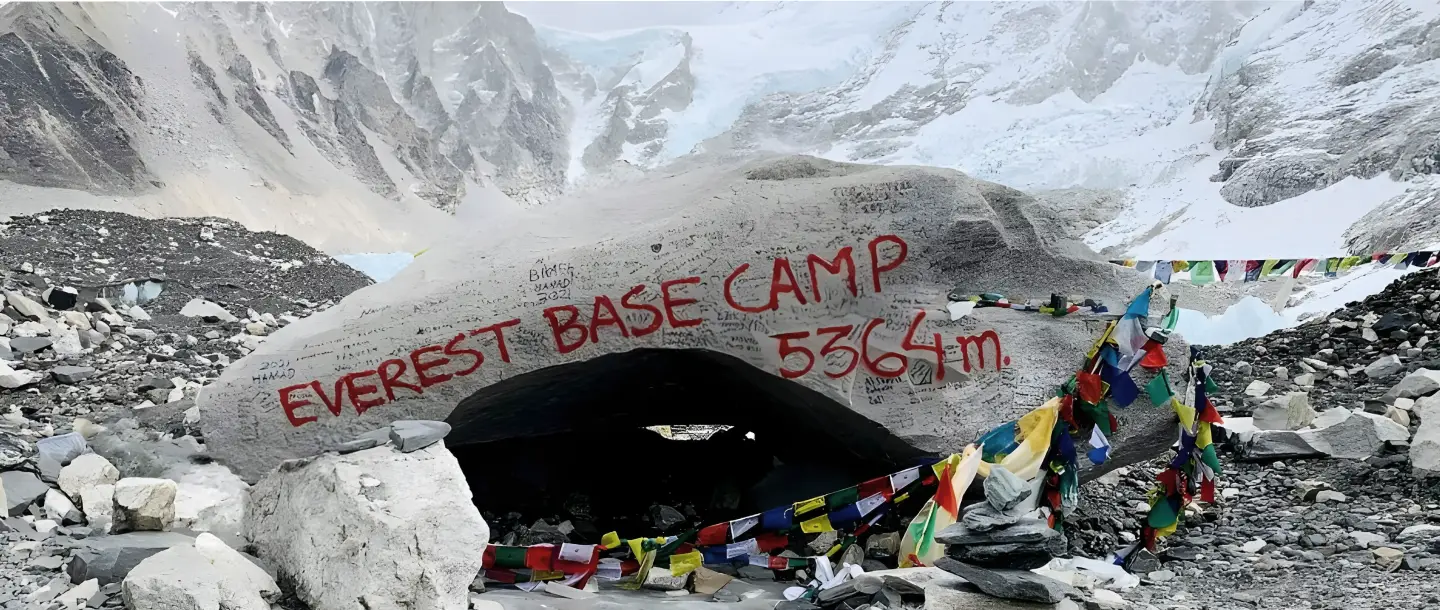
Everest Base Camp Trek: The Complete 2026 Planning Guide
Why Every High-Altitude Trekker Needs These Two Life-Saving Tools (And How to Use Them Properly)
Acclimatiation Process to make your trip successful
