
Himlung Exped 7126m
A remote 7,000-metre climb above Nepal’s Nar Phu Valley
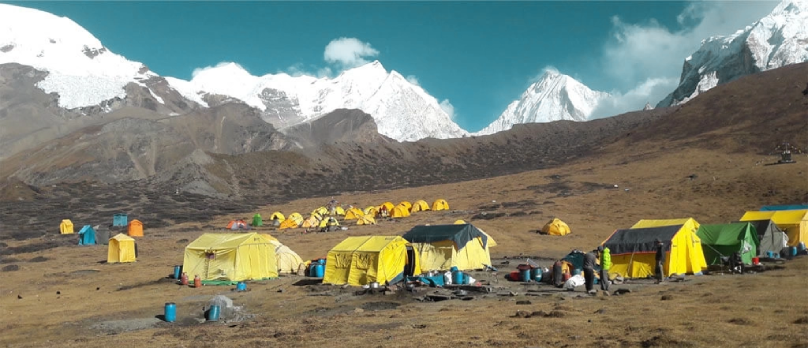
Himlung Himal is a serious expedition mountain reached through one of Nepal’s least commercialised high valleys. The journey begins on the Annapurna corridor, turns away from the main trail at Koto and follows a narrowing gorge toward Phu. By the time the team reaches base camp, villages have given way to glacier, snow camps and the routines of a high-altitude expedition.
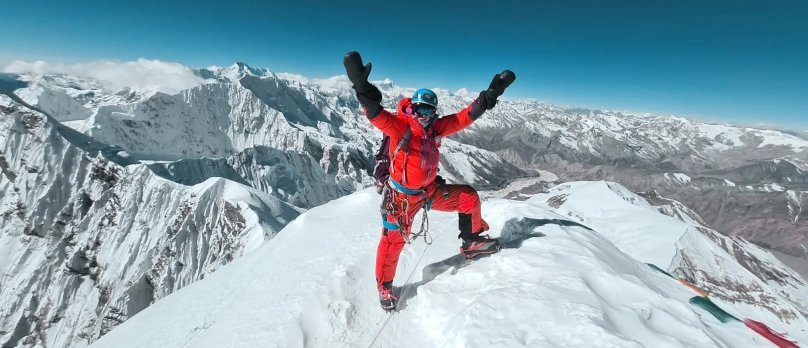
The summit rises to 7,126 metres near Nepal’s northern border. Himlung is often described as a progression peak for climbers preparing for 8,000-metre objectives because its normal route generally demands less sustained technical climbing than steeper mountains of similar seriousness. That comparison is useful only when the altitude is not minimised. Above 7,000 metres, eating, sleeping, melting water and making decisions all become slower.
The approach is part of the value of the expedition. Nar Phu is a restricted region with Tibetan-influenced architecture, monasteries, chortens and stone settlements that have developed far from Nepal’s main trekking centres. Phu Gaon is the final major village before the climbing phase and an important acclimatization stop.
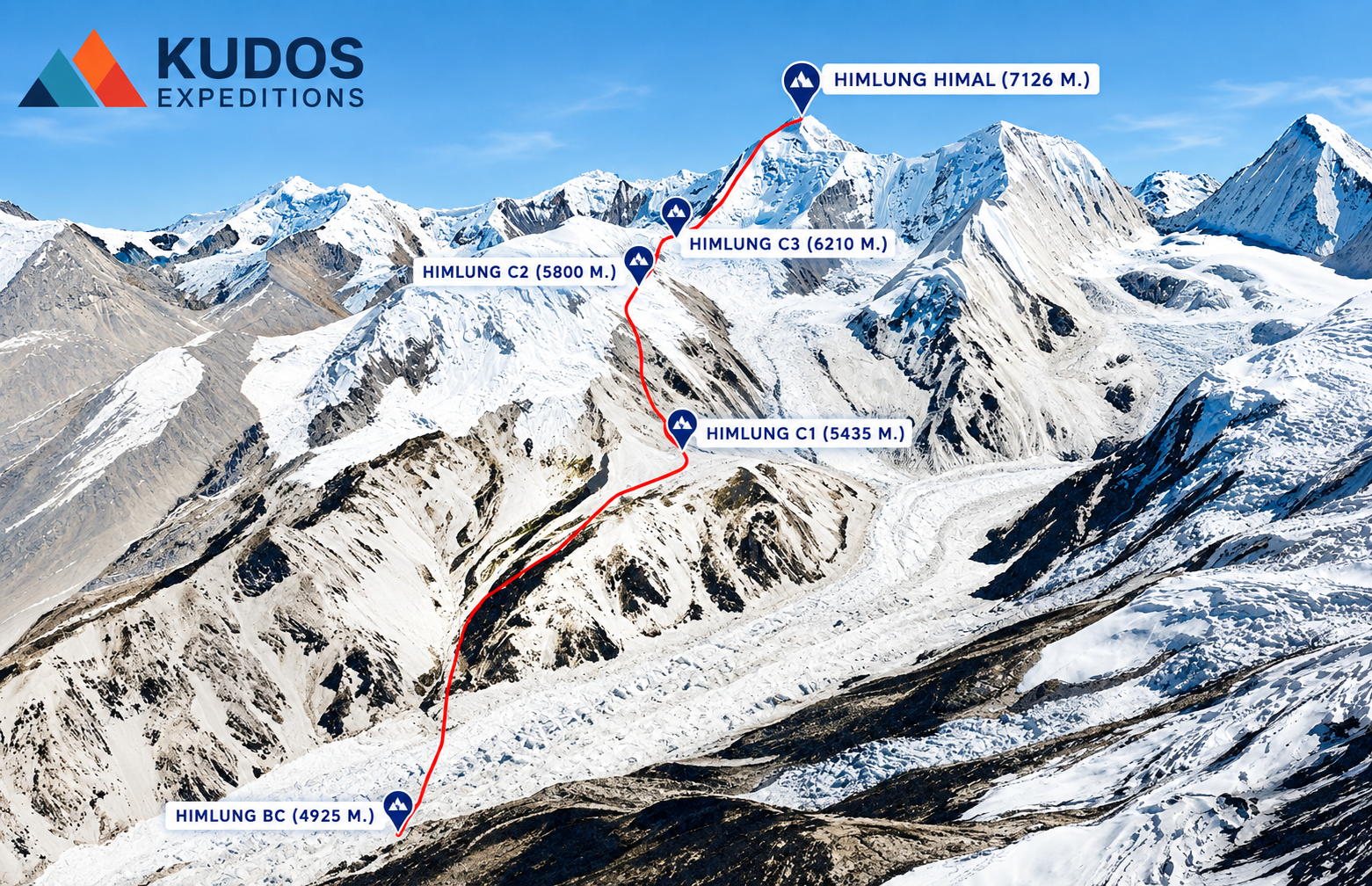
From base camp, most commercial teams establish three higher camps. Camp I is commonly placed around 5,430–5,450 metres, Camp II around 5,800–6,000 metres and Camp III around 6,200–6,350 metres. Exact sites change with glacier movement, snow cover, crevasses and the guide’s judgement.
The normal line is described by different operators as the West Ridge, Northwest Ridge or Southwest normal route. Those names do not always refer to entirely different commercial lines; mapping conventions and camp placement vary. The product should state the route intended for the specific season after the climbing leader has reviewed current conditions.
This 31-day program provides time for the Nar Phu approach, base-camp training, acclimatization rotations, recovery and a summit window. It is designed for climbers who already understand crampon travel, glacier rope systems and fixed-line movement. Himlung can be a first 7,000-metre expedition, but it should not be a first mountain.
Himlung Himal Expedition at a glance
| Trip detail | Information |
| Mountain | Himlung Himal |
| Summit altitude | 7,126 m / 23,379 ft |
| Region | Nar Phu Valley, Manang District, Nepal |
| Trip duration | 31 days |
| Difficulty | Challenging high-altitude expedition |
| Normal approach | Besisahar / Annapurna corridor to Koto, Meta, Kyang and Phu |
| Base Camp | Approximately 4,850–4,925 m |
| Camp I | Approximately 5,430–5,450 m |
| Camp II | Approximately 5,800–6,000 m |
| Camp III | Approximately 6,200–6,350 m |
| Accommodation | Hotel, teahouse and expedition tents |
| Main climbing season | Autumn; selected spring departures may operate |
| Current foreign royalty | USD 800 spring, USD 400 autumn, USD 200 winter/summer |
| Additional permits | Nar Phu restricted-area permit and ACAP |
Why climbers choose Himlung Himal
Himlung provides a complete expedition structure without the sustained technical rock climbing found on mountains such as Ama Dablam or Cholatse. Members establish base-camp routines, move through multiple high camps and complete a summit push above 7,000 metres.
The route is remote enough to preserve a strong expedition atmosphere. The Nar Phu approach receives fewer visitors than the Everest corridor, and the final journey beyond Phu is organised around pack animals, porters, camping and weather rather than a dense teahouse network.
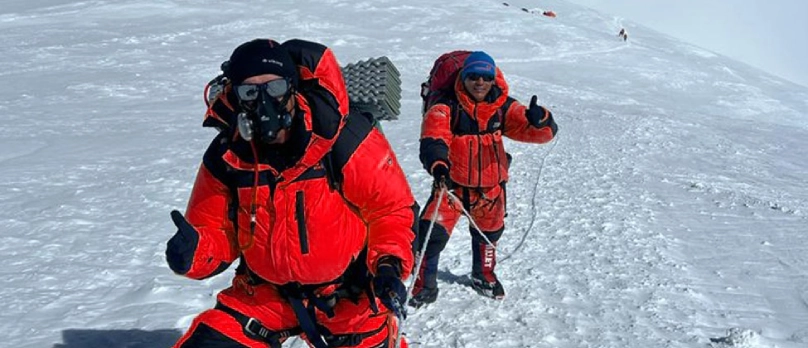
For climbers considering future 8,000-metre peaks, Himlung tests the relevant habits: moving efficiently while roped, sleeping above 6,000 metres, managing appetite, using a down suit and making conservative decisions when fatigue is severe.
The mountain should not be promoted solely through success rates. Snow stability, crevasse conditions, wind, cold and individual acclimatization can change the outcome of any season.
Expedition highlights
- Climb a 7,126-metre Himalayan summit.
- Travel through the restricted Nar Phu Valley.
- Visit Koto, Meta, Kyang and the historic settlement of Phu.
- Acclimatize gradually before entering the high camps.
- Live at a supported expedition base camp above Phu.
- Complete rotations through Camps I and II before the summit push.
- Use glacier rope systems, crampons and fixed lines where required.
- Climb from Camp III into the upper snow slopes and summit ridge.
- Gain relevant preparation for future 8,000-metre expeditions.
- Experience a quieter mountain environment than Nepal’s busiest climbing regions.
The Himlung Himal Route Explained
Base Camp to Camp I
The route leaves base camp and enters glaciated terrain. Rope-team use depends on crevasse exposure and current snow cover. Camp I is generally established around 5,430–5,450 metres, high enough to test recovery without committing the team too far up the mountain.
Camp I to Camp II
The route continues over snow and glacier to Camp II, commonly between 5,800 and 6,000 metres. Crevasse patterns can force significant route changes. Wind and reflected sun may create very different conditions within the same day.
Camp II to Camp III
Camp III is commonly placed around 6,200–6,350 metres. The line can become steeper and more exposed, and hard ice may require careful fixed-line movement. The camp is the launch point for the summit bid.
Camp III to the summit
The final climb is governed by altitude. Steeper upper sections may approach approximately 45–50 degrees in some conditions, but the angle alone does not define the difficulty. Wind, snow stability, cold and the time required to descend are more important than a printed grade.
Route-name variation
Operators use West Ridge, Northwest Ridge and Southwest normal route terminology. The product page should identify the route selected for the season rather than presenting all names as if they are interchangeable certainties.
Difficulty and Required Experience
How hard is Himlung Himal?
Himlung is often graded around PD or PD+ by operators, but a grade cannot describe the physiological cost of climbing above 7,000 metres.
The standard route usually demands more glacier and snow competence than technical rock climbing. Climbers still encounter crevasses, fixed lines, steep ice and extreme cold.
The expedition is harder than Mera Peak, Island Peak or Lobuche East because of the altitude, camp duration and recovery demands, even when the individual climbing moves are not dramatically harder.
Recommended experience
- At least one successful 6,000-metre expedition climb.
- Previous nights above 5,500–6,000 metres.
- Independent crampon, ice-axe and harness competence.
- Experience moving on a glacier in a rope team.
- Reliable fixed-line ascent and descent technique.
- Ability to carry an expedition pack for consecutive long days.
Who should choose another objective first?
A person whose highest experience is a teahouse trek, who has never worn crampons or who cannot manage a long descent while fatigued should begin with a properly instructed 6,000-metre peak.
Acclimatization and Health
The approach through Meta, Kyang and Phu creates gradual altitude gain before base camp. Rotations then expose the body to Camps I and II before the summit phase.
Early symptoms of acute mountain sickness include headache, nausea, dizziness, poor appetite, unusual fatigue and disturbed sleep. Worsening symptoms require a halt in ascent.
Confusion, loss of coordination, severe breathlessness at rest and a wet cough are emergency signs. Descent is the primary treatment.
Fitness does not prevent altitude illness. Strong climbers sometimes create risk by moving too fast or hiding symptoms.
Above 7,000 metres, sleep, digestion and judgement decline. Time at Camp III and above must be limited.
Training for Himlung Himal
Build expedition endurance
Prepare for at least four to six months. Long hill days with a weighted pack should become routine rather than exceptional.
Strength and durability
Use step-ups, squats, lunges, calf raises, posterior-chain work, loaded carries and core training. The goal is stable movement under a pack, not maximum gym numbers.
Technical preparation
- Flat-foot and front-point crampon technique.
- Self-arrest fundamentals.
- Glacier rope-team movement.
- Ascender use and fixed-line changeovers.
- Controlled descent with gloves.
- Crevasse-rescue awareness.
Cumulative fatigue
Complete back-to-back mountain days and at least one longer expedition or winter skills course. Himlung tests how consistently a climber performs after several weeks away from normal recovery.
Best Time to Climb Himlung
Autumn
September and October are the main commercial period. Post-monsoon weather can provide clear air, but early-season snow and late autumn cold remain important.
Spring
Selected operators run spring expeditions. Warmer temperatures may help the approach, while changing snow and afternoon weather affect the upper route.
Winter and monsoon
Deep winter brings severe cold and wind. Monsoon conditions create road, trail and glacier complications. These are specialist periods rather than standard recommendations.
Accommodation, Food and Camp Life
Teahouses on the approach
Koto, Meta, Kyang and Phu have varying levels of lodge service. Rooms are simple, often unheated and may have shared bathrooms. Availability changes outside the main trekking months.
Expedition camps
From the base-camp approach onward, the program relies on tents, a kitchen team and organised load movement. High-camp tents are shared and exposed.
Food
Lodge meals include dal bhat, noodles, rice, soup, potatoes, eggs and bread. At base camp, the kitchen team provides warm, high-calorie meals selected for digestion and hygiene.
Water
At high camps, water is produced by melting snow. This requires fuel and time. Climbers must maintain a drinking routine even when thirst and appetite decline.
Permits, Royalty and Restricted-Area Rules
Himlung Himal falls within Nepal’s 7,001–7,500-metre royalty band. Current foreign-climber fees effective from 1 September 2025 are USD 800 in spring, USD 400 in autumn and USD 200 in winter or summer.
The approach enters the Nar Phu restricted area. Foreign visitors require a restricted-area permit arranged through an authorised Nepalese agency and must follow the current group and guide rules.
An Annapurna Conservation Area entry permit is also normally required.
Government procedures may include a liaison officer, staff insurance, garbage deposit or environmental documentation. The final quotation should show how these items are handled.
Insurance, Rescue and Communication
Insurance must cover mountaineering to at least 7,126 metres, helicopter evacuation where physically possible, medical treatment and repatriation.
Helicopter rescue from the upper mountain is not guaranteed. Weather, terrain and operating limits may require a climber to be lowered or carried to a safer pickup location.
The 2025 fatal incident on Himlung demonstrated how quickly severe altitude illness, snow blindness, frostbite and weather can combine beyond the reach of immediate aviation support. The page should use that lesson to explain limits, not to sensationalise tragedy.
The expedition should carry reliable radios, satellite communication, medical oxygen and a documented emergency contact procedure.
Technical Equipment
Personal climbing equipment
- High-altitude mountaineering boots compatible with crampons.
- 12-point crampons.
- Climbing helmet.
- Sit harness.
- General mountaineering ice axe.
- Handled ascender and safety attachment.
- Descender or belay device.
- Locking and non-locking carabiners.
- Prusik loops or specified backup system.
- High-altitude mittens and spare gloves.
- Headlamp with spare batteries.
Cold-weather and expedition gear
- Down suit or expedition-grade down layers.
- Waterproof shell and high-altitude trousers.
- Thermal base layers and insulating mid-layers.
- Balaclava, warm hat and neck protection.
- Category 4 glacier glasses and ski goggles.
- Expedition sleeping bag.
- 40–50 litre climbing pack.
- Insulated bottles and thermos.
Group equipment
Ropes, anchors, snow protection, tents, stoves, communications, first-aid supplies and route-fixing equipment are arranged according to the expedition service level.
Responsible Expedition Operations
- Remove oxygen cylinders, batteries, food packaging and damaged tents.
- Use a documented toilet and human-waste system at base camp.
- Avoid washing directly in streams used by local communities.
- Respect monasteries, chortens and village photography customs.
- Pay porters, mule handlers, cooks and climbing staff fairly.
- Provide appropriate clothing, insurance and rescue coverage for Nepalese staff.
- Limit unnecessary packaging before cargo leaves Kathmandu.
Himlung Compared with Other Nepal Peaks
| Comparison | Main difference |
| Himlung vs Mera Peak | Himlung is 656 metres higher and requires a longer expedition, more high camps and stronger altitude experience. |
| Himlung vs Baruntse | Both are 7,000-metre progression peaks. Route difficulty and remoteness vary by season and expedition approach. |
| Himlung vs Ama Dablam | Ama Dablam is lower but far more technical and exposed. Himlung is more strongly defined by altitude and glacier systems. |
| Himlung vs Everest | Himlung is a useful progression objective but does not reproduce the death-zone exposure, oxygen dependency or objective hazards of Everest. |
Why Climb Himlung with Kudos Expeditions?
A 7,000-metre expedition should be sold through operational clarity rather than the phrase entry-level.
Kudos Expeditions can combine the restricted Nar Phu approach with a supported base camp, progressive rotations and three high camps.
Before payment, the company should confirm the expedition leader, high-altitude guide ratio, route-fixing responsibility, communication system, oxygen policy and staff insurance.
The live price of USD 13,500 should be linked to an exact service definition. Clients need to know whether the package includes a personal Sherpa, supplemental oxygen, summit bonus, high-camp load carries and contingency beyond the stated dates.
Frequently Asked Questions
Is Himlung Himal a good first 7000m peak?
Yes, Himlung is widely considered one of the safest and most accessible 7000m peaks. It has lower objective dangers (fewer avalanches and crevasses) compared to mountains like Baruntse. Ang highly recommends it as a stepping stone for 8000m climbing.
How technical is the climb on Himlung Himal?
The climb is mostly non-technical, involving sustained snow and glacier walking. The main challenge is the extreme altitude and the long summit day. You need to be comfortable using fixed lines, but you do not need advanced vertical ice climbing skills.
Where is Himlung Himal located?
Himlung is located in the remote Nar Phu region, near the Tibetan border, northeast of the Annapurna circuit. The trek into Base Camp offers a stunning, off-the-beaten-path cultural experience through ancient Tibetan-style villages.
How long does the Himlung Expedition take?
The expedition takes approximately 30 days. This allows ample time for the remote trek in, establishing multiple high camps (usually Camp 1, 2, and 3), acclimatizing safely, and waiting for the perfect weather window for the summit.
What gear do I need for a 7000m peak like Himlung?
You will need expedition-grade gear, including an 8000m down suit, 8000m triple-insulated boots (like the La Sportiva Olympus Mons), and a -40°C sleeping bag. Standard 6000m gear is not warm enough for the extreme cold of Himlung.
Book the Himlung Himal Expedition
Himlung is a mountain for climbers ready to discover what happens after 6,000 metres: slower recovery, colder camps, longer decisions and a summit that depends on discipline more than speed.
Contact Kudos Expeditions with your climbing résumé, previous high-altitude experience, preferred season and equipment needs. Acceptance should follow a guide review rather than payment alone.
Standard Himlung Exped 7126m Itinerary
Day 1
Arrival in Kathmandu
Meet the Kudos Expeditions representative at Tribhuvan International Airport and transfer to the hotel. Rest after international travel and submit passport, insurance and emergency-contact details. Overnight: Hotel in KathmanduDay 2
Expedition briefing and equipment inspection
Review the route, permit process, camp plan, communication system, rescue limits and turnaround rules. Inspect mountaineering boots, crampons, harness, helmet, ice axe, ascender, descender, down suit or high-altitude clothing, sleeping bags and personal medical supplies. Overnight: Hotel in Kathmandu.Day 3
Drive from Kathmandu to Besisahar
Travel west through the middle hills toward Besisahar, the traditional gateway to the Annapurna region. Road time varies with traffic and construction. Expedition cargo may travel separately according to the logistics plan. Overnight: Lodge or hotel in Besisahar, around 760 m.Day 4
Drive from Besisahar to Koto
Continue by mountain vehicle through the Marsyangdi corridor toward Dharapani and Koto. The road is rough and exposed in places. Koto is the junction where the expedition leaves the Annapurna Circuit and enters the restricted Nar Phu route. Overnight: Teahouse in Koto, around 2,600 m.Day 5
Trek from Koto to Meta
Pass the restricted-area checkpoint and follow the Nar Khola through a narrow gorge, forest and suspension bridges. The day is long and contains repeated short climbs before reaching the open settlement area at Meta. Overnight: Teahouse or camp in Meta, around 3,560 m. Walking: approximately 7–8 hours.Day 6
Trek from Meta to Kyang
Continue through increasingly dry terrain, passing abandoned or seasonal settlements and wide views toward the northern peaks. Kyang is a small settlement rather than a major village. Facilities are simple and may depend on the season. Overnight: Lodge or camp in Kyang, around 3,800 m.Day 7
Trek from Kyang to Phu Gaon
Follow the river beneath eroded cliffs and climb toward the entrance to Phu. Prayer walls, chortens and tightly built stone houses mark the transition into the main village. Overnight: Teahouse in Phu Gaon, around 4,080 m.Day 8
Acclimatization and cultural day in Phu
Take a controlled hike above the village or toward a monastery and return to sleep in Phu. Use the afternoon for hydration, equipment organisation and a health check before the camping phase. Overnight: Phu Gaon.Day 9
Trek from Phu to Himlung Base Camp approach camp
Leave the permanent village and move toward the glacial valley beneath Himlung. Depending on pack-animal access and campsite condition, the team may use an intermediate camp rather than making a large jump directly to base camp. Overnight: Tented approach camp, approximately 4,500–4,700 m.Day 10
Establish Himlung Base Camp
Continue to the base-camp site, commonly between 4,850 and 4,925 metres. Receive personal tents and learn the locations of the dining, kitchen, communication, medical and sanitation areas. Overnight: Himlung Base Camp.Day 11-12
Base Camp adaptation and skills review
Rest after the approach while the staff organises loads and reviews the glacier route. Practise fixed-line ascent, descent, crampon movement, rope-team spacing, crevasse response and radio communication. Overnight: Himlung Base Camp.Day 13-15
First rotation to Camp I
Climb from base camp onto glacier and snow terrain toward Camp I. Spend the planned night at Camp I, assess sleep and appetite, then descend to base camp. The exact sequence may include a carry, touch-and-return day or one overnight according to previous altitude experience. Overnights: Camp I and Base Camp.Day 16-18
Second rotation to Camp II
Return through Camp I and continue to Camp II, commonly around 5,800–6,000 metres. Sleep at Camp II if health, weather and route conditions are acceptable. Descend to base camp after completing the rotation objective. Overnights: Camps I/II and Base Camp.Day 19-21
Recovery and summit preparation
Rest at base camp, repair equipment and monitor recovery. Confirm the weather window, fixed-line status, high-camp loads, guide pairing and summit-day communication plan. Climbers who have not recovered properly do not begin the summit push. Overnight: Himlung Base Camp.Day 22
Base Camp to Camp I
Begin the summit phase and climb to Camp I at a deliberate pace. Protect energy, hydrate and prepare equipment for the move higher. Overnight: Camp I.Day 23
Camp I to Camp II
Continue across snow and glacier terrain toward Camp II. Movement slows as the team approaches 6,000 metres. Small equipment and foot problems must be managed immediately. Overnight: Camp II.Day 24
Camp II to Camp III
Climb to the highest camp, normally around 6,200–6,350 metres. Review the summit forecast, route condition, clothing and turnaround schedule. Overnight: Camp III.Day 25
Summit Himlung Himal and descend
Leave Camp III before dawn. The upper route may include steeper snow or ice, fixed ropes and crevasse navigation. Reach the 7,126-metre summit only while weather, time, pace and physical condition remain within the team’s safety margin. Descend to Camp III or Camp II according to strength, daylight and conditions. Summit day commonly requires 8–12 hours or more.Day 26-27
Summit contingency window
Use these days if wind, snowfall, route work or team condition delayed the first attempt. If the summit was completed on Day 25, descend through the high camps and begin clearing personal equipment. Overnights: According to the active climbing plan.Day 28
Return to Base Camp and close the climbing phase
Descend from the high camps to base camp. Recover, account for oxygen or fuel systems where used and begin packing expedition waste and equipment. Overnight: Himlung Base Camp.Day 29
Trek from Base Camp to Phu or Kyang
Leave the expedition camp and return toward the nearest practical lodge or lower campsite. The precise endpoint depends on staff loads, pack animals and group recovery. Overnight: Phu or Kyang.Day 30
Trek and drive toward Dharapani or Besisahar
Continue through the Nar Phu route toward Koto and meet the expedition vehicle where road access allows. This may be a long combined walking-and-driving day. A safer private schedule can add an extra return day. Overnight: Dharapani, Besisahar or en route according to logistics.Day 31
Return to Kathmandu and departure arrangements
Complete the road journey to Kathmandu and transfer to the hotel or airport according to the confirmed itinerary. International flights should not be booked tightly against this day because road delays and expedition changes are common. End of expedition services.Things Included in Trip cost

Transportation
-
Airport Transfers: All arrival and departure transport between Kathmandu International Airport and your hotel, including any transfers required by itinerary.
-
Vehicles & Transport : Kathmandu ↔ Besisahar | Dharapani ↔ Kathmandu
-
Ground Transport: All ground transportation as per the itinerary for members and expedition supplies.
-
Cargo Handling: Free assistance for customs clearance and cargo handling for expedition equipment and food shipments

Accomodation
-
4 nights in a 3-star hotel in Kathmandu on a bed and breakfast basis.
-
Comfortable guesthouse accommodation during the trekking period.
-
Expedition-style single or double tents at Base Camp and higher camps (Camp 1, Camp 2, High Camp) with insulated mattresses.
-
Dining, kitchen, and toilet tents provided at Base Camp.

Meals
-
All meals (Tea, Breakfast, Lunch, and Dinner) during the trek and climbing period at Base Camp and higher camps.
- Tea & Biscuits in the afternoon.
- Fresh fruits as Desserts after dinner

Guides and Staff
-
Experienced and licensed Climbing Sherpa Guide for the expedition & Personally guided by ANG .
-
Professional Cook and Kitchen Staff at Base Camp.
-
Required number of Porters for carrying group and personal equipment.
-
Government Liaison Officer as per expedition regulations.
-
Insurance coverage for all Nepali expedition and support staff.

Permit & Fees
-
Himlung Expedition Climbing Permit.
- Garbage Deposit Fee USD $500 as required by the Nepal Mountaineering Association (NMA).

Equipment and Logistics
-
All necessary group climbing equipment, including fixed ropes, main ropes, snow bars, ice hammers, and ice screws.
-
Expedition tents for all camps (Base Camp, Camp 1, Camp 2, and High Camp).
-
Emergency medical kit and first-aid supplies.
Things Not Included in Trip cost

Travel and Visa
- Nepal Visa fee (please bring two passport-size photographs and cash in USD).
-
International airfare to and from Nepal.
-
Excess baggage charges for domestic or international flights.

Insurance and Emergencies
- Personal, travel, and rescue insurance (mandatory for all participants).
-
Emergency helicopter evacuation (if required).
Accommodation and Meals in Kathmandu
-
Breakfast, lunch, and dinner in Kathmandu (except as stated in “Includes”).
-
Extra nights in Kathmandu due to early arrival, late departure, or early return from the expedition for any reason outside the scheduled itinerary.

Personal Expenses
-
All cold drinks (bottled water, soft drinks, beer, and bar bills).
-
Hot showers during the trek.
-
Battery charging for electronic devices and Wi-Fi/internet usage.
-
Extended activities or optional side trips not mentioned in the itinerary.
-
Personal climbing gear (boots, harness, crampons, clothing, etc.).

Tips and Gratuities
Tips for guides, Sherpa staff, porters, and kitchen crew (at your discretion).
Himlung Exped 7126m Trek MAP
Book Now
Join fixed Departure with Ang
Departing Dates
and Price
Availability
1 October, 2027 - 31 October, 2027
$ 13500
1
Must Know Before your Trip
Everest Base Camp Trek: The Complete 2026 Planning Guide
Why Every High-Altitude Trekker Needs These Two Life-Saving Tools (And How to Use Them Properly)

Acclimatiation Process to make your trip successful
