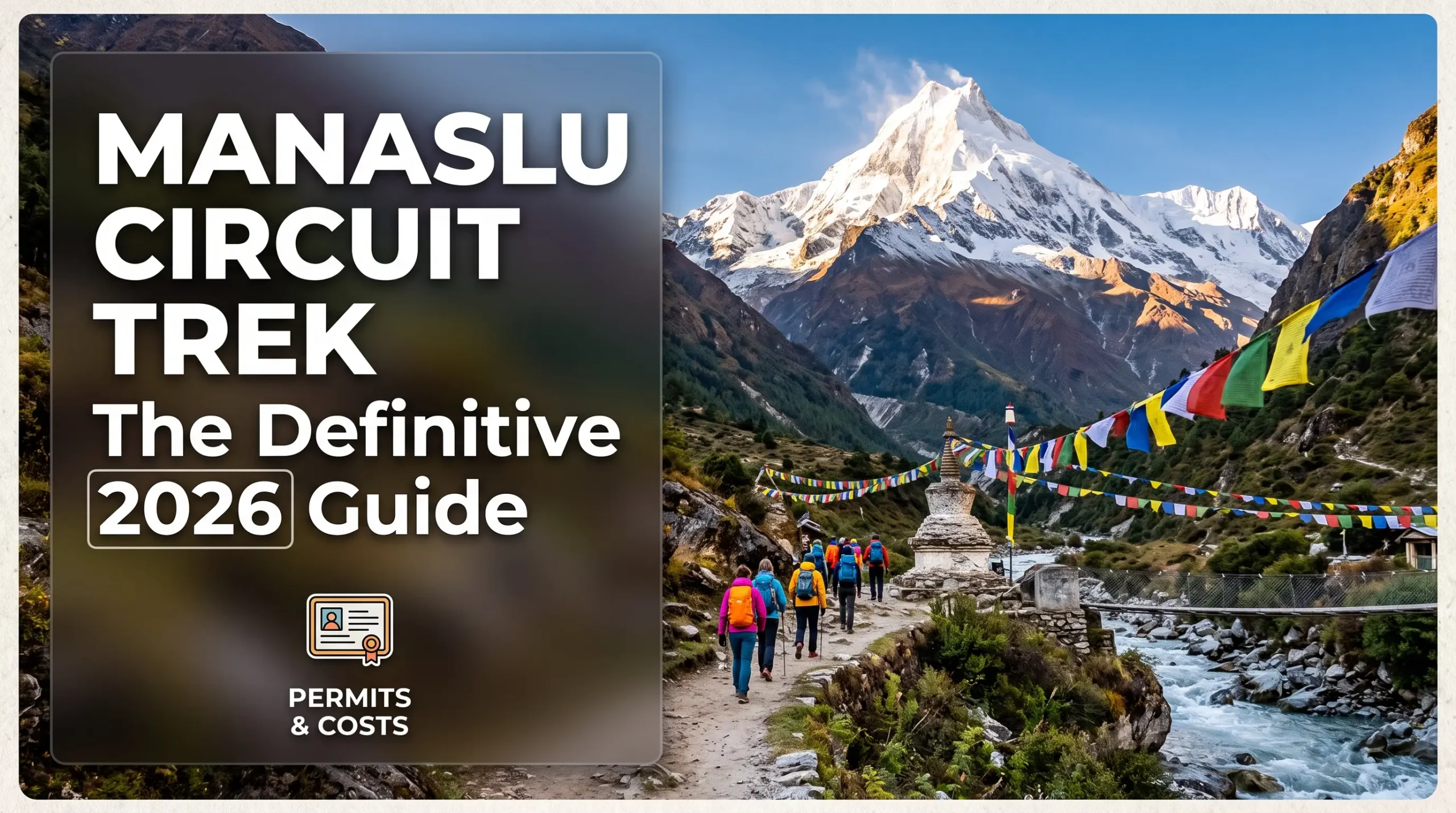
Manaslu Circuit Trek: The Definitive 2026 Guide
The Financial Reality of the Trail
Nepal keeps its secrets well guarded. The Manaslu Circuit remains a strictly restricted zone. You cannot simply land in Kathmandu, throw a pack on your back, and start walking into the mountains. Strict permit regulations have governed this route since 1992. These rules exist to protect the Tibetan Buddhist culture of the Nubri Valley. They limit the sheer environmental ruin that comes with unchecked mass tourism. You need a licensed guide. You need a minimum group size of two people. You need a clear, unromantic understanding of the financial reality awaiting you on the trail.
The total cost for a fourteen to eighteen-day trek ranges heavily based on your expectations and your willingness to endure discomfort. Budget trekkers spend between $1,200 and $1,800. They sleep in the most basic teahouses available. They ride the local bus, which is a punishment in itself. Standard trekkers pay between $1,800 and $2,
800. This secures slightly better rooms and a private jeep for at least one leg of the journey. Full-service guided tours run from $3,000 to $4,500. This premium price absorbs all private transport, the top available lodges, and personal porters who carry everything you do not want to carry yourself.
| Category | Estimated Cost | Accommodation | Transport | Guide Ratio |
|---|---|---|---|---|
| Budget Trekker | $1,200 – $1,800 | Basic teahouses | Local bus | Shared guide |
| Standard Trekker | $1,800 – $2,800 | Improved lodges | Private jeep (partial) | Dedicated guide |
| Full-Service Tour | $3,000 – $4,500 | Top-tier lodges | Private transport | Guide & private porters |
The Unbending Rules of Permits
Permits form the unbending foundation of your budget. The Manaslu Restricted Area Permit dictates your access beyond the Jagat checkpoint. You cannot obtain this document yourself. Do not try. A trekking agency registered with the Trekking Agencies Association of Nepal must file the paperwork on your behalf. September through November marks the peak season. The government charges $100 per person for the first week of access. Every additional day costs $15. December through August brings the off-peak rate. You pay $75 for the first week and $10 for each additional day. Two more permits are strictly required. The Manaslu Conservation Area Permit costs 3,000 Nepalese Rupees, which translates to roughly $23. The Annapurna Conservation Area Permit demands the exact same fee because your exit route bleeds into the Annapurna region. You do not need a TIMS card. Some agencies will claim you need one. They are lying to pad their margins. Refuse to pay it.
| Permit Type | Season | Cost |
|---|---|---|
| Manaslu Restricted Area (RAP) | Peak (Sep–Nov) | $100 (1st week) + $15/day extra |
| Manaslu Restricted Area (RAP) | Off-Peak (Dec–Aug) | $75 (1st week) + $10/day extra |
| Manaslu Conservation (MCAP) | All Year | 3,000 NPR (~$23) |
| Annapurna Conservation (ACAP) | All Year | 3,000 NPR (~$23) |
Your agency requires your documents two to three weeks before departure. They need a color scan of your passport. It must be valid for at least six months from your entry date. They need two digital photos. Travel insurance proving coverage up to 6,000 meters is mandatory, and they will check the fine print. Processing takes one to two business days. October volume can stretch this delay to four days as the immigration office drowns in paperwork. Arrive in Kathmandu early to absorb this buffer.
You will present these papers at four distinct checkpoints. Jagat sits at 1,340 meters. Officials verify everything here. The inspection is thorough and they will look for discrepancies. Deng provides the secondary check. This usually goes fast. Samagaun is the final serious hurdle before you enter the high acclimatization zone. Dharapani serves as your exit node when you merge with the Annapurna trail. Teahouse owners will also ask for your permits when you check in for the night. Give them the documents without complaint. It is part of their operating license.
The Necessity of Guides and Porters
Solo trekking is impossible. The 2015 regulation requires all foreign trekkers to hire a licensed guide and walk in groups of at least two. The checkpoint guards at Jagat enforce this without exception. Solo arrivals face grim choices. They can wait at the barrier and beg to join another group, which rarely works. They can pay for the permits of a second person as a ghost trekker, an illegal and expensive workaround. Or they can turn back. The rule exists to prevent death. The Larkya La Pass sits at 5,106 meters. Altitude sickness strikes indiscriminately. Trekkers disappear. Guided groups survive because problems are caught early. Helicopters cost money and bad press. Guides prevent the need for them.
Licensed guides cost between $25 and $35 a day. Your fourteen-day trek will demand $350 to $500 for their services. This daily wage covers their food, lodging, and insurance. The agency handles the baseline logistics. You get daily route planning. You get altitude monitoring from someone who knows what a pulmonary edema sounds like. You get a translator who negotiates for beds when the villages fill up and the teahouse owners start turning people away. Senior guides with a decade of mountain time ask for $35. Newer guides charge the floor rate. October scarcity drives prices up across the board. March provides better availability and more room for negotiation.
Porters change the physical reality of your trek. They carry up to twenty kilograms of your gear. You pay $20 to $25 a day for their labor. Many standard trekkers share a single porter. The daily split saves energy for the brutal ascent to Larkya La. You are responsible for tipping them at the end. Budget trekkers carry their own weight. This is cheaper. It is also significantly harder and increases your caloric deficit on steep ascents.
| Service | Daily Rate | Details |
|---|---|---|
| Licensed Guide | $25 – $35 | Mandatory for permits; covers food, lodging, and logistics. |
| Porter | $20 – $25 | Carries up to 20kg; shared by many standard trekkers. |
Transportation Logistics
Getting to the trailhead costs money and patience. Soti Khola or Machha Khola serve as the starting lines. Local buses run from Kathmandu. They are loud. They are crowded. They are cheap. You will pay $10 to $15. The ride takes ten brutal hours over broken roads that wash out in the rain. Private jeeps cost between $200 and $250. You split this cost among your group. The jeep cuts the travel time and spares your spine. The exit from Dharapani offers the exact same dynamic. A jeep back to Kathmandu or Pokhara costs another $250. Pay it if you can. Your knees will thank you.
Accommodations and the Price of Comfort
Sleep comes cheap but lacks any real comfort. Teahouse rooms cost $5 to $10 a night. You get two wooden beds. You get thin foam mattresses. You get unwashed blankets that smell like the hundred trekkers who slept there before you. As you climb higher, prices remain stable but quality drops sharply. Samdo and Dharmasala offer the bare minimum required to keep you from freezing. You must eat at the teahouse where you sleep. Owners enforce this rule strictly. If you sleep in their beds and eat elsewhere, they will charge you $20 just for the room. The dining hall revolves around a central stove fueled by dried yak dung. Everyone huddles around it until the fire dies. Then everyone goes to sleep.
Hydration and Nutrition at Altitude
Food consumes a massive part of the daily budget. You will spend $25 to $35 a day on meals. Everything you eat is carried up the mountain by mules or men. A bowl of dal bhat costs $5 at the bottom of the valley. It costs $10 at Dharmasala. Eggs, noodles, and fried rice dominate the menu. Meat is dangerous. Buddhist communities in Nubri strictly prohibit animal slaughter. Any meat you eat was killed days ago down in the lower valleys and carried up in the sun. Stick to vegetarian meals unless you want to spend three days violently ill in a plywood room. Order your breakfast the night before. The kitchen runs on a tight schedule. If you order in the morning, you will wait an hour to eat.
Water demands constant attention and constant cash. Bottled water is banned in the Manaslu Conservation Area. You cannot buy plastic bottles. Safe drinking water stations sell filtered water for $1 to $3 a liter. Boiling water at the teahouses costs the same. Budget trekkers bring water purification tablets or mechanical filters. They process tap water for free. You will drink four to five liters a day at altitude. Buy the tablets. Your body needs hydration to acclimatize. Headaches start when you stop drinking.
The Physical Toll of the Terrain
The terrain dictates your pace. You spend the first few days trapped in the steep gorge of the Budi Gandaki river. You cross suspension bridges that sway hundreds of feet above white water. Landslides frequently wipe out sections of the trail. The humidity in the lower elevations drains you. The landscape shifts as you climb. Jungle gives way to pine forests. Pine forests give way to barren alpine scrub. The air thins. Breathing requires conscious effort by the time you reach Lho and see the towering peak of Manaslu for the first time. The physical toll accumulates quietly. Every step above 3,500 meters takes a toll on your reserves.
Acclimatization dictates survival. Samagaun sits at 3,530 meters. You will spend two nights here. This is not a rest day. You climb high and sleep low. Trekkers hike toward Manaslu Base Camp or Pungyen Gompa to force their bodies to adapt to the thin air. Altitude sickness starts as a dull ache behind the eyes. It progresses to nausea and a total loss of appetite. Ignore these symptoms and fluid fills your lungs or your brain swells. The descent is the only cure. Pay attention to your breathing. Do not lie to your guide about how you feel.
The push over Larkya La defines the entire circuit. Dharmasala sits at 4,460 meters. It is a cluster of stone huts where nobody sleeps well. The cold cuts through everything. You wake at three in the morning. You pack in the dark. Headlamps form a slow line up the moraine. The ascent is a brutal, agonizing slog over loose rock and snow. The wind rips across the pass. False summits break your spirit repeatedly. Reaching the prayer flags at 5,106 meters brings relief, but the day is only half over. The descent to Bimtang drops nearly 1,400 meters in a few hours. It destroys your knees. You arrive exhausted, starving, and grateful the climbing is done.
The Tsum Valley Extension
The Tsum Valley extension adds an entire week to your timeline. It pulls you deeper into an ancient Tibetan enclave near the border. This detour changes your permit math significantly. You need the Tsum Valley Restricted Area Permit. It costs $40 for the first eight days between September and November. It costs $30 the rest of the year. You will pay your guide and porter for seven extra days of work. You will buy seven extra days of food and lodging. Expect this detour to add $400 to $600 to your total bill. The isolation is absolute. You visit Mu Gompa and Rachen Gompa. You see a side of the Himalayas that most trekkers skip entirely because they lack the time or the money. It is worth the investment if you have both.
Critical Gear and Insurance
Travel insurance is not optional. The permit office requires hard proof before issuing your papers. Your policy must explicitly cover helicopter evacuation up to 6,000 meters. Standard travel insurance stops at 3,000 meters and abandons you. Read the policy details carefully. World Nomads and Global Rescue provide the required coverage. You will pay $100 to $200 for a one-month policy. If you collapse near the pass, a helicopter ride costs $5,000. Do not rely on GoFundMe. Pay for the insurance.
Modernity bleeds into the mountains slowly. Wi-Fi exists but mostly frustrates. Teahouses sell internet access for $3 to $5 a night. The connection fails when the clouds roll in or the wind picks up. Everest Link cards sometimes work. Do not rely on them for emergencies. Charging your electronics costs money. You pay by the hour or by the device. A full phone charge costs $3. A power bank charge costs $5 to $10 depending on the size. Solar panels save money. Bring a high-capacity power bank. Charge it when the sun shines and keep it warm in your sleeping bag at night to preserve the battery life.
Gear costs depend entirely on your closet. Renting a sleeping bag in Kathmandu costs $1 a day. Renting a down jacket costs the same. Buying fake North Face gear in Thamel saves money up front. It will fall apart quickly and leave you shivering when the temperature drops below zero. Bring proper boots that you have already broken in. Blisters at 4,000 meters become infected easily. Bring trekking poles to save your knees on the descents. Bring a serious medical kit with diamox and broad-spectrum antibiotics. The mountains do not forgive bad equipment.
Weather Windows
Weather windows dictate your safety. October offers clear skies and stable temperatures. It also brings crowds. November brings bitter cold but perfect visibility. Spring offers blooming rhododendrons and warmer days, but the hazy skies obscure the peaks. Summer brings the monsoon. Leeches cover the trails. Landslides block the roads. The teahouses close. Do not attempt the circuit in July or August. The risk outweighs the reward entirely. Time your arrival. Secure your permits early.
The Rules of Tipping
Tipping closes the financial loop of your journey. The trekking industry runs on gratuities. Teahouse owners make their money on food. Guides and porters make their actual living on tips. You hand over the money on the last night of the trek, usually in Dharapani or Besisahar. Guides expect $10 to $12 a day from the collective group. Porters expect $8 to $10 a day. Calculate the total. Put it in an envelope. Hand it directly to the person. Do not hand the porter’s tip to the guide. Hand it to the porter. They carried your weight when you could barely carry yourself.
Nepal demands preparation. The Manaslu Circuit punishes those who ignore the rules or underestimate the terrain. Pay the fees. Hire the guide. Walk the trail. The mountains wait for no one.
FAQ
Is a TIMS card required for the Manaslu Circuit?
The Trekkers’ Information Management Systems card is a relic of the past for this specific route. As of the 2024-2026 trekking cycle, the government does not require a TIMS card because the restricted area permits provide sufficient tracking and data collection. Dishonest agencies frequently attempt to pad their profit margins by invoicing you for this card. Refuse the charge immediately. You only need the Manaslu Restricted Area Permit, the Manaslu Conservation Area Permit, and the Annapurna Conservation Area Permit to satisfy legal requirements. Paying for a TIMS card is a donation to an agency’s bottom line that buys you zero additional access or safety.
Can I trek the Manaslu Circuit without a guide?
Hiring a licensed guide is a non-negotiable legal mandate. This 2015 government regulation exists because the Larkya La pass at 5,106 meters is a lethal environment for the unprepared or the isolated. Altitude sickness and sudden weather shifts kill solo trekkers who have nobody to monitor their vitals or coordinate a rescue. The Jagat checkpoint guards serve as the first line of enforcement and they will not let you pass without a verified guide license and agency paperwork. The rule is not a suggestion; it is a survival mechanism designed to prevent the logistical and reputational nightmare of another mountain disappearance.
What happens if I try to trek solo?
Arriving at the trailhead alone is a recipe for frustration and financial loss. You will be stopped at the very first major checkpoint and denied entry. Your choices at that barrier are uniformly grim. You can wait around and hope to find a group willing to take a stranger into their legal permits, which is a rare occurrence. You can attempt to pay for a “ghost trekker” permit, essentially paying double for the privilege of walking with a guide you still had to hire. The most common outcome is being forced to turn back to Kathmandu, wasting your travel time and your transport fees because you ignored the group size requirements.
Is there internet access on the trail?
Digital connectivity is a luxury that grows increasingly fragile as you ascend. Teahouses sell Wi-Fi access for three to five dollars a night, but the quality of the connection is miserable. Once you pass Namrung, the signal becomes patchy and often disappears entirely when the wind picks up or clouds roll in. Everest Link cards provide a slightly more stable alternative but they are far from guaranteed. Power is also a commodity; expect to pay between three and ten dollars to charge your devices or power banks. Do not plan to work from the trail. The mountains demand your attention, and the infrastructure will fail you if you rely on it for anything critical.
Can I buy plastic water bottles on the trek?
The Manaslu Conservation Area enforces a total ban on plastic water bottles to prevent the environmental degradation of the alpine ecosystem. You will not find them for sale at any teahouse. Instead, you must rely on safe drinking water stations that sell filtered water for a few dollars per liter. For a sustainable budget, bring your own water purification tablets or a mechanical filter to treat tap water yourself. You need at least four liters of hydration daily to combat altitude sickness. Buying tablets is the only way to ensure you have constant access to clean water without bankrupting yourself or contributing to the mountain’s trash problem.
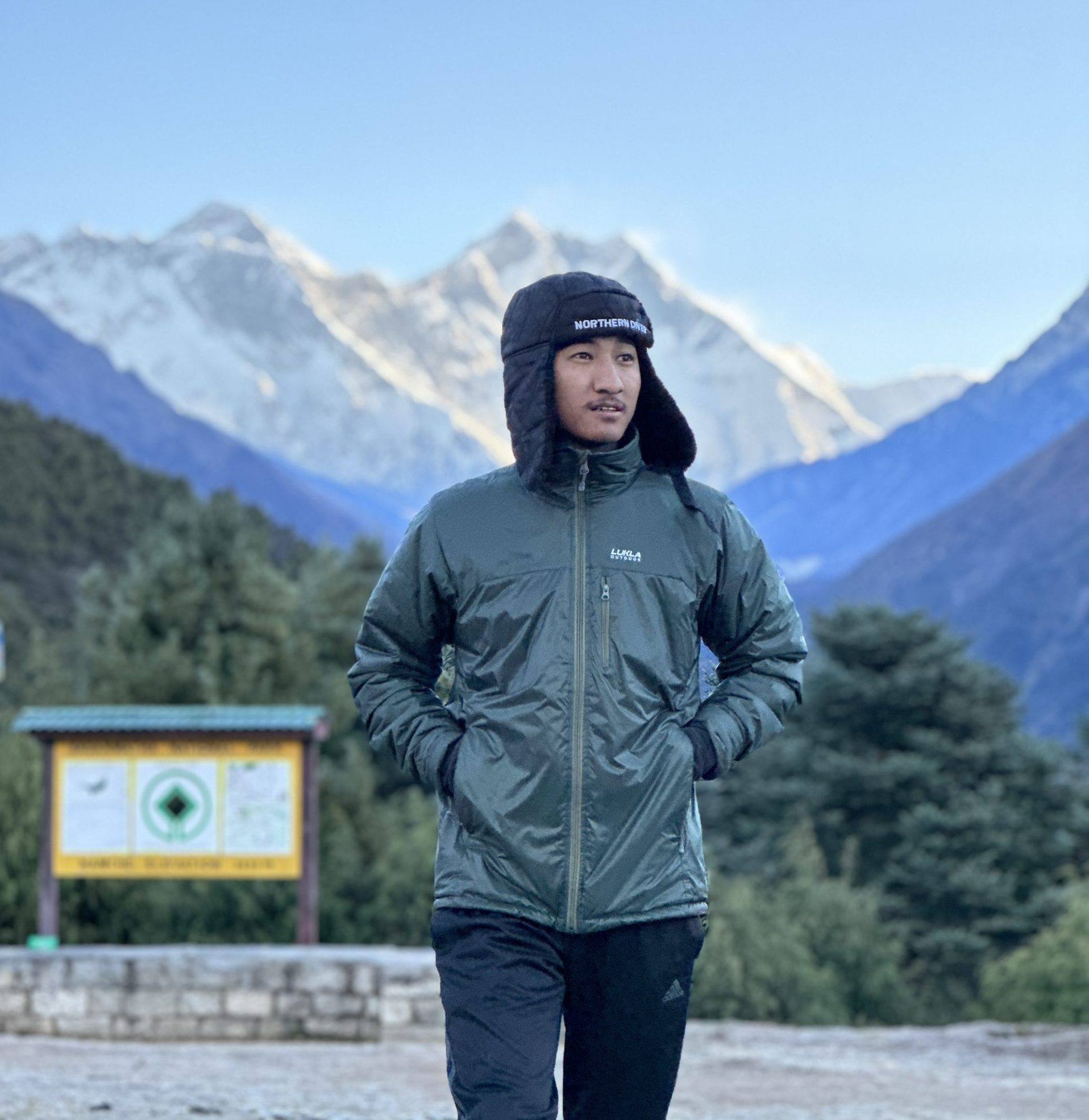
Hello, I'm Ang Tsering Sherpa. For the past 26 years, I've been immersed in the tourism industry, following a path shared by generations of my Sherpa family. With pride, dedication, and a deep-rooted passion, we Sherpas have dedicated ourselves to leading travelers along Nepal’s trails and mountains.
Know More