
Island Peak Climbinng

Trip Difficulty: Moderate

Trip Days:18

Max Elevation: 6165m

Daily Activity: 6-7 hours Trek

Trip Starts: Lukla

Trip Ends: Lukla
A structured first Himalayan summit in the Everest region
Island Peak is where a trek through the Khumbu becomes a climb. The approach begins on the familiar trail from Lukla to Namche Bazaar, then moves through Tengboche, Dingboche and Chhukung into the Imja Valley. By the time the team reaches base camp, trekking poles are no longer enough. Crampons, an ice axe, a harness and fixed-rope systems become part of the plan.
The mountain is known locally as Imja Tse. From Dingboche, it appears to rise from the surrounding ice like an island, which explains the English name used by most climbers and trekking companies. The Nepal Mountaineering Association currently lists Imja Tse at 6,160 metres, while the live Kudos page uses 6,165 metres. The page should choose one recognised figure and apply it consistently across facts, itinerary, schema and booking material.
Island Peak is widely promoted as a beginner-friendly Himalayan climb. That description needs context. It can be a suitable first 6,000-metre summit for a fit and coachable person, but the route is not an ordinary hike. Summit day combines altitude, cold, darkness, glacier travel, a steep rope-assisted headwall and an exposed upper ridge.
A good Island Peak itinerary succeeds before summit night begins. Namche and Dingboche provide staged acclimatization. Chhukung gives the team time to rest, review equipment and practise rope systems. Base camp introduces the climbing environment without forcing the body directly from a teahouse to the upper mountain.
This 18-day program is designed as a skills-and-summit journey. It allows participants to learn the practical systems required for the climb while also experiencing the cultural and geographical depth of the Everest region. Sherpa villages, monasteries, the Dudh Koshi valley and the wide Imja basin are not background scenery; they form the route that makes the summit possible.
Kudos Expeditions should present Island Peak as a serious but achievable objective. The summit is never guaranteed. Weather, route conditions, acclimatization, pace and the condition of the team determine whether a safe attempt is possible.
Island Peak Expedition at a glance
| Trip detail | Information |
| Mountain | Island Peak / Imja Tse |
| Official NMA altitude | 6,160 m / 20,210 ft |
| Region | Imja Valley, Everest region, Nepal |
| Trip duration | 18 days |
| Difficulty | Challenging technical trekking peak |
| Starting and finishing point | Lukla |
| Main acclimatization stops | Namche Bazaar and Dingboche |
| Final approach village | Chhukung |
| Climbing camp | Island Peak Base Camp |
| Typical summit-day duration | 8–12 hours or more |
| Climbing terrain | Rocky approach, glacier, steep snow or ice and summit ridge |
| Main equipment | Helmet, harness, crampons, ice axe, ascender and descender |
| Best-known seasons | Spring and autumn |
| Core permits | Island Peak climbing permit plus regional entry requirements |
Why climbers choose Island Peak
Island Peak offers a clear progression from trekking to mountaineering. Participants walk through established teahouse villages, then learn to move on glaciated terrain and use fixed lines on a real Himalayan objective.
The route is compact enough to fit into an 18-day program but high enough to provide meaningful experience above 6,000 metres. It tests endurance, equipment management, altitude response and concentration during descent.
The mountain also sits within one of Nepal’s most recognisable landscapes. Ama Dablam dominates the lower route, while Lhotse, Nuptse, Baruntse, Makalu and the Imja peaks appear from changing angles. Everest itself is partly hidden from the summit by the Lhotse wall, a fact that should be explained honestly rather than oversold.
For future objectives, Island Peak can provide a useful foundation. It introduces crampon movement, ascender use, glacier spacing and high-altitude summit timing. Those skills do not automatically qualify someone for Ama Dablam or larger expeditions, but they create a practical base for further training.
Expedition highlights
- Climb Island Peak / Imja Tse in the Everest region.
- Follow the classic Lukla, Namche and Tengboche approach.
- Complete acclimatization hikes above Namche and Dingboche.
- Enter the wide Imja Valley through Chhukung.
- Practise crampon, ice-axe, harness and fixed-rope systems before summit night.
- Travel across glacier terrain under guide supervision.
- Climb the headwall using fixed lines where conditions require them.
- Traverse an exposed summit ridge in a high Himalayan setting.
- See Ama Dablam, Lhotse, Nuptse, Baruntse and surrounding peaks.
- Gain real 6,000-metre climbing experience within an 18-day expedition.
Understanding the Island Peak Route
The approach through the Khumbu
Island Peak uses the main Everest trail as far as Dingboche, then turns into the Imja Valley. This gives the route strong teahouse infrastructure and a proven acclimatization sequence.
Namche provides the first major adaptation stop. Dingboche creates the second. Chhukung then places the team close to the mountain without forcing a direct move from 4,400 metres to base camp.
The route can also be combined with Everest Base Camp and Kala Patthar. That extension adds days and altitude exposure but may improve acclimatization when planned correctly.
Base camp, glacier and headwall
From base camp, the route begins on rock and moraine. The terrain is uneven, and moving efficiently in darkness requires concentration before any technical equipment is used.
At the glacier entry, climbers put on crampons, adjust harnesses and join rope systems. The glacier changes every season. Crevasses may require detours, ladders or a different line.
The headwall is the defining technical section. Fixed ropes are commonly used for ascent and descent. Conditions may range from firm snow to hard ice or mixed debris, which changes the physical and mental difficulty.
The summit ridge is exposed and can become congested. Guides may delay, shorten or end the attempt when queueing creates unacceptable risk.
What summit day demands
The climb begins before dawn because firm snow, calmer winds and a larger daylight margin generally favour safe movement.
Cold affects simple tasks. Adjusting a carabiner, opening a bottle or fixing a loose crampon becomes slower while wearing thick gloves.
Altitude reduces pace and recovery. A climber who moves too quickly on the rocky approach may reach the technical section without enough energy.
The summit is the halfway point. Warming snow, fatigue and reduced concentration make descent one of the most serious parts of the day.
Difficulty and Required Experience
How hard is Island Peak?
Island Peak is best described as a challenging technical trekking peak. It is less complex than Ama Dablam, but significantly harder than a high-altitude trek.
The route combines several types of difficulty: prolonged altitude exposure, a long summit day, glacier movement, fixed-rope climbing and an exposed ridge.
Conditions control the grade. A well-covered snow slope may climb efficiently, while hard ice, open crevasses or fresh debris can make the same section more demanding.
Recommended participant profile
- Strong trekkers with experience on several consecutive mountain days.
- Participants with previous travel above 4,500 metres where possible.
- People willing to learn crampon, ice-axe and fixed-rope systems.
- Climbers comfortable following turnaround decisions without argument.
- Travellers able to carry a 7–10 kg daypack for long periods.
Can a beginner climb Island Peak?
A fit beginner can attempt Island Peak with proper training, a conservative itinerary and direct guide supervision. Previous mountaineering instruction is strongly preferred. One skills day at base camp should refresh and apply technique, not replace all preparation.
Acclimatization and Altitude Safety
Island Peak rises above 6,000 metres, so acclimatization determines whether fitness can be used effectively.
The itinerary includes active days in Namche and Dingboche, followed by Chhukung Ri or a lower acclimatization hike. Each stage increases exposure while preserving a lower sleeping altitude.
Early symptoms of acute mountain sickness include headache, nausea, dizziness, poor appetite, unusual fatigue and disturbed sleep. Worsening symptoms require a stop in ascent.
Confusion, loss of coordination, severe breathlessness at rest or a wet cough are emergency signs. Descent and medical support take priority over the summit.
Hydration, regular meals and controlled pacing support acclimatization. Strong athletes are not immune and may create additional risk by moving too fast.
Training for Island Peak
A realistic 10-week preparation plan
- One long hill hike each week with a loaded daypack.
- Two steady cardiovascular sessions such as running, cycling, rowing or incline walking.
- Two strength sessions using step-ups, squats, lunges, calf raises, posterior-chain work and core training.
- One mobility or recovery session.
- At least one full rest day.
Back-to-back hiking
Complete consecutive walking days during the final month. Summit readiness depends on performing after accumulated fatigue, not only on a single fresh workout.
Technical preparation
Practise fitting crampons, walking on snow, carrying an ice axe, using an ascender and descending a fixed line. Gloves should be worn during practice because dexterity changes in cold conditions.
Taper before departure
Reduce training in the final week. Arrive rested, healthy and free from avoidable overuse injuries.
Best Time to Climb Island Peak
Spring: March to May
Spring is one of the main climbing seasons. Temperatures gradually become less severe, and snow cover can support efficient crampon travel. Storms, warming snow and afternoon cloud remain possible.
Autumn: September to November
Autumn commonly brings clear post-monsoon air and stable trekking conditions. Nights can be colder, and hard ice may increase the technical feel of the headwall.
Winter
Winter climbing is possible for experienced, properly equipped teams. Severe cold, wind and short daylight make it less suitable for first-time climbers.
Monsoon
Cloud, precipitation, unstable flights and heavy high-altitude snow make the monsoon a specialist season rather than a standard recommendation.
Accommodation, Food and Expedition Life
Teahouses
The approach uses mountain lodges with simple twin rooms, shared bathrooms and communal dining areas. Bedrooms are normally unheated. Charging, hot showers and Wi-Fi often cost extra.
Base camp
Island Peak Base Camp uses tents. Space is practical rather than comfortable, and water must be carried or melted. Meals are simple, warm and selected for digestion at altitude.
Food
Teahouse menus commonly include dal bhat, rice, noodles, soup, potatoes, pasta, eggs, porridge and bread. Familiar carbohydrate-rich food is generally the safest choice before summit day.
Hydration
Cold and dry air increase fluid loss while reducing thirst. Carry insulated bottles, drink regularly and begin summit day well hydrated.
Permits, Flights and Insurance
Island Peak climbing permit
Island Peak is listed by the Nepal Mountaineering Association as Imja Tse. Current 2026 market guidance widely reports foreign-climber fees of USD 350 in spring and USD 175 in autumn, winter and summer, following the fee revision effective from September 2025. The live page should verify the official amount before every season rather than leaving old fees in static copy.
Regional permits
The approach requires Sagarmatha National Park entry and the current Khumbu local entry or trek-card documentation. TIMS requirements should be confirmed against the exact itinerary and the latest Nepal Tourism Board provision.
Lukla and Ramechhap flights
During busy seasons, Lukla flights may operate from Ramechhap. This requires a long road transfer and an early departure. Weather delays can affect either airport.
Insurance
The insurance policy must cover technical mountaineering to at least 6,160 metres, helicopter evacuation, medical treatment and repatriation. Trekking-only policies may exclude fixed-rope climbing.
Technical Equipment
Personal climbing equipment
- Mountaineering boots compatible with crampons.
- 10- or 12-point crampons.
- Climbing helmet.
- Sit harness.
- General mountaineering ice axe.
- Handled ascender with safety attachment.
- Belay or descent device.
- Locking and non-locking carabiners.
- Prusik loops or backup system specified by the guide.
- Warm climbing gloves and a spare pair.
- Headlamp with spare batteries.
Cold-weather and trekking equipment
- Down jacket and waterproof shell.
- Thermal base layers and insulating mid-layers.
- Waterproof trousers or climbing salopettes.
- Warm hat, balaclava and neck gaiter.
- Glacier sunglasses and ski goggles.
- Sleeping bag appropriate for base-camp temperatures.
- 30–40 litre climbing pack.
- Trekking poles.
- Two insulated water bottles or a bottle and thermos.
Group equipment
The climbing team arranges fixed ropes, anchors, glacier rope, tents, stoves, communications, first-aid supplies and other shared systems according to the route plan.
Safety and Responsible Climbing
Turnaround decisions
The guide may end an attempt because of time, pace, symptoms, congestion, weather or route conditions. A safe turnaround is a professional decision.
Fixed-line discipline
Remain clipped as instructed, maintain spacing and do not overtake without guide approval.
Crevasse hazards
Glacier openings change from year to year. Follow the rope system and do not wander away from the marked route.
Cold injury prevention
Protect fingers, toes and face before numbness becomes persistent. Wet gloves and tight boots increase risk.
Waste management
Carry personal rubbish and damaged equipment back to an approved disposal point. Follow the camp toilet system.
Respect for the Khumbu
The route passes Sherpa villages, monasteries and working porter trails. Give way, keep noise low and ask before photographing people.
Island Peak Compared with Other Nepal Peaks
| Comparison | Main difference |
| Island Peak vs Mera Peak | Island Peak is lower but generally steeper and more technical. Mera is higher and demands stronger altitude endurance. |
| Island Peak vs Lobuche East | Both involve glacier and fixed-line climbing. Lobuche East is often considered more sustained or technical, depending on conditions. |
| Island Peak vs Ama Dablam | Ama Dablam is a major technical expedition with exposed rock and mixed climbing. Island Peak is an introductory objective by comparison. |
| Island Peak vs Everest Base Camp | Everest Base Camp is a trek to 5,364 m. Island Peak adds technical equipment, glacier travel and a 6,000-metre summit. |
Why Climb Island Peak with Kudos Expeditions?
A good Island Peak Expedition is defined by acclimatization, skills preparation and decision quality rather than an advertised success percentage.
Kudos Expeditions can combine the established Khumbu teahouse approach with practical training and a supported base camp. Guides observe how participants move, recover and use equipment before approving the summit attempt.
The company should publish guide-to-client ratios, true summit policy, group equipment, communication systems and emergency oxygen arrangements clearly in the booking terms.
The strongest commercial message is not that every client will summit. It is that the team will provide a properly paced, professionally managed opportunity to climb.
Frequently Asked Questions
What is the hardest part of the Island Peak climb?
The most challenging section is the steep 150-meter ice headwall just before the summit ridge. You must ascend this vertical section using a jumar on a fixed rope. Ang will fix lines and guide you 1-on-1 to ascend safely.
Can Island Peak be combined with the Everest Base Camp Trek?
Yes, this is the most popular combination. Our itinerary naturally incorporates the EBC trek to ensure your body is fully acclimatized before heading to Island Peak Base Camp for the climb.
Do I need technical climbing experience for Island Peak?
While previous experience is beneficial, it is not strictly required if you are exceptionally fit. Ang provides a full day of technical training at Base Camp, teaching you how to use crampons, ice axes, and ascenders effectively.
What is the success rate for Island Peak?
Because we ensure extensive acclimatization via the EBC trek and provide expert 1-on-1 guidance on the headwall, our summit success rate is exceptionally high. However, severe weather can occasionally force a turnaround.
What gear is required for Island Peak?
You will need 6000m double boots, a harness, jumar, descender (figure 8 or ATC), crampons, and an ice axe. If you don’t own this highly specialized gear, Ang can arrange high-quality rentals in Chhukung village or Kathmandu.
Book the Island Peak Expedition
Island Peak is a natural next step for trekkers who want to learn how a Himalayan climb is organised and how technical systems feel in real altitude.
Contact Kudos Expeditions to discuss your previous experience, equipment, preferred season and whether the standard 18-day program or a longer Everest Base Camp combination is the right option.
Standard Island Peak Exped 6165m Itinerary
Day 1
Arrival in Kathmandu
Meet the Kudos Expeditions representative at Tribhuvan International Airport and transfer to the hotel. Use the remainder of the day to rest after international travel. Keep passport, insurance and emergency contacts available. Overnight: Hotel in KathmanduDay 2
Expedition briefing and equipment check
The climbing guide reviews the route, altitude plan, summit-day systems, weather contingency and turnaround policy. Inspect mountaineering boots, crampons, helmet, harness, ascender, descender, ice axe, carabiners, gloves and sleeping bag. Missing equipment can be hired or purchased in Kathmandu. The team confirms permits, baggage limits and the operating airport for the Lukla flight. Overnight: Hotel in Kathmandu.Day 3
Fly to Lukla and trek to Phakding
Fly to Lukla, either directly from Kathmandu or through Ramechhap during seasonal traffic management. After meeting the porter team, descend through Chaurikharka and follow the Dudh Koshi toward Phakding. The first stage is intentionally short to allow recovery from the flight and begin the trek conservatively. Overnight: Teahouse in Phakding, around 2,610 m. Walking: about 3–4 hours.Day 4
Trek from Phakding to Namche Bazaar
Cross suspension bridges and enter Sagarmatha National Park near Monjo. Beyond Jorsale, the route begins the sustained climb to Namche. The final ascent is the first major endurance test. A slow pace reduces unnecessary fatigue and supports acclimatization. Overnight: Teahouse in Namche Bazaar, around 3,440 m. Walking: approximately 6–7 hours.Day 5
Acclimatization day in Namche Bazaar
Hike toward the Everest View area, Khumjung or another viewpoint selected by the guide. The purpose is to gain elevation during the day and return to sleep in Namche. The afternoon is reserved for food, hydration and health checks. Overnight: Teahouse in Namche Bazaar.Day 6
Trek from Namche to Tengboche
Contour above the Dudh Koshi with views toward Ama Dablam, Everest, Lhotse and Thamserku. Descend to the river and climb through forest to Tengboche, home to the major monastery of the upper Khumbu. Overnight: Teahouse in Tengboche, around 3,860 m. Walking: about 5–6 hours.Day 7
Trek from Tengboche to Dingboche
Descend through forest to Deboche, cross the Imja Khola and continue through Pangboche. The valley opens as vegetation becomes lower and drier. Dingboche sits among stone-walled fields beneath Nangkartshang. Overnight: Teahouse in Dingboche, around 4,410 m. Walking: approximately 5–6 hours.Day 8
Acclimatization day in Dingboche
Climb toward Nangkartshang Peak or another high point chosen by the guide. The day can be physically demanding despite being labelled acclimatization. Return to Dingboche for lunch and recovery. The guide assesses appetite, sleep, headache, breathing and general condition before approving further ascent. Overnight: Teahouse in Dingboche.Day 9
Trek from Dingboche to Chhukung
Follow the Imja Valley east toward Chhukung. The distance is moderate, allowing the team to arrive with energy for the next day. Island Peak becomes more distinct as the valley narrows. Chhukung is the final teahouse settlement before base camp. Overnight: Teahouse in Chhukung, around 4,730 m. Walking: about 3–4 hours.Day 10
Acclimatization and Chhukung Ri option
Climb partway or fully toward Chhukung Ri depending on weather and team condition. The viewpoint rises above 5,500 metres and provides strong acclimatization when used conservatively. Participants who are not ready for the full ascent can complete a lower hike. The goal is adaptation, not an unnecessary test. Return to Chhukung for rest and equipment organisation. Overnight: Teahouse in Chhukung.Day 11
Trek to Island Peak Base Camp
Leave Chhukung and follow the Imja Valley toward Island Peak Base Camp. The route crosses glacial moraine and increasingly barren terrain. At camp, tents are assigned and the climbing team reviews water, meals, equipment and the summit schedule. Overnight: Tented Island Peak Base Camp, commonly around 5,100 m. Walking: about 4–5 hours.Day 12
Skills training and route preparation
Use nearby terrain for practical instruction. Participants practise fitting crampons, moving with an ice axe, clipping fixed lines, ascending with a jumar and descending with the approved device. The guide checks harness fit, carabiner orientation, glove management and communication commands. Training reduces uncertainty, but it does not remove the need for direct supervision on summit day. Overnight: Island Peak Base Camp.Day 13
Summit Island Peak and return to base camp or Chhukung
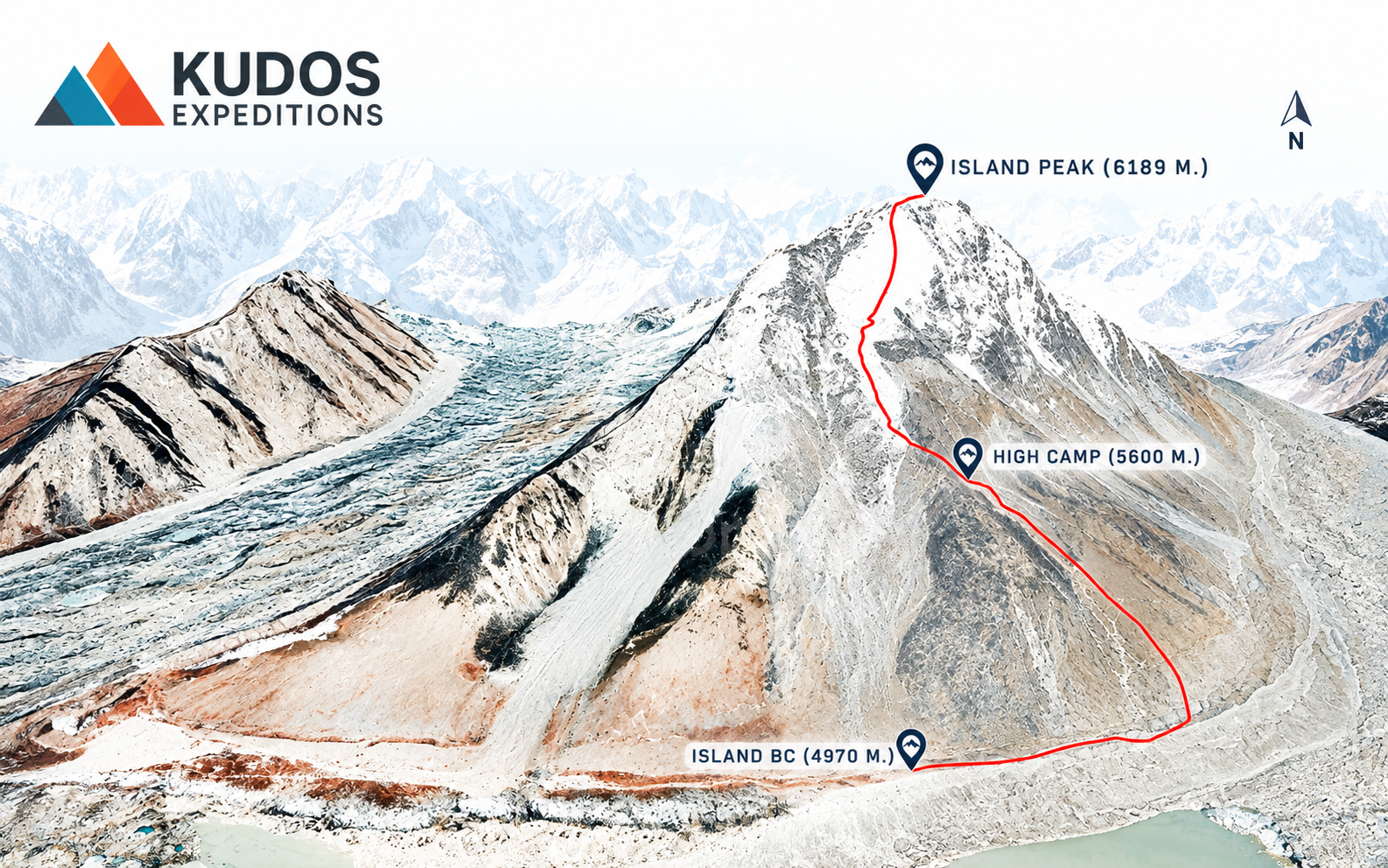
Wake around midnight and begin the climb in darkness. The lower route crosses rocky ground and moraine before reaching the glacier and crampon point. The team ropes up where required and moves across glaciated terrain. Crevasses and route openings vary from season to season. A steep headwall is commonly climbed on fixed ropes. The angle, surface and length of fixed-line climbing depend on current conditions and the position of the route. Above the headwall, the summit ridge can be narrow and exposed. Climbers continue only while weather, time, pace and group condition remain acceptable. After the summit or turnaround point, descend carefully to base camp. Strong groups may continue to Chhukung; others remain at camp. Highest point: 6,160 m using the current NMA listing. Summit day: often 8–12 hours or more.Day 14
Summit contingency or recovery day
Use this day if weather, route fixing or team readiness delayed the climb. If the summit attempt occurred on Day 13, descend to Chhukung and continue recovery at lower altitude. A contingency day protects decision quality and should not be removed simply to shorten the product. Overnight: Chhukung or the appropriate campDay 15
Trek from Chhukung to Namche Bazaar
Descend through Dingboche, Pangboche and the Tengboche area before returning toward Namche. This is a long day. Thicker air improves movement, but fatigue from the climb can remain significant. Overnight: Teahouse in Namche Bazaar. Walking: approximately 7–9 hours.Day 16
Trek from Namche to Lukla
Descend to the Dudh Koshi, pass Monjo and Phakding and complete the final climb to Lukla. The group prepares baggage and holds a closing meal with the local staff. Overnight: Teahouse in Lukla. Walking: approximately 6–7 hours.Day 17
Fly to Kathmandu
Fly from Lukla to Kathmandu or Ramechhap according to the seasonal operating pattern, then complete any road transfer. Return to the hotel and attend a debrief or farewell meal according to the package. Overnight: Hotel in Kathmandu.Day 18
International departure
Transfer to Tribhuvan International Airport for the onward flight. Travellers with flexible schedules should still consider keeping an additional independent buffer day after Lukla. End of expedition services.Things Included in Trip cost

Transportation
-
All airport transfers: Arrival and departure (Airport ↔ Hotel ↔ Airport).
-
Domestic round-trip flight: Kathmandu ↔ Lukla.

Accomodation
-
4 nights in a 3-star hotel in Kathmandu on a bed and breakfast basis.
-
Comfortable guesthouse accommodation during the trekking period.
-
Expedition-style single or double tents at Base Camp and higher camps (Camp 1, Camp 2, High Camp) with insulated mattresses.
-
Dining, kitchen, and toilet tents provided at Base Camp.

Meals
-
All meals (Tea, Breakfast, Lunch, and Dinner) during the trek and climbing period at Base Camp and higher camps.
-
Farewell dinner in Kathmandu at the end of the expedition.

Permits & Fees
-
Island Peak Climbing Permit.
-
Garbage Deposit Fee USD $500 as required by the Nepal Mountaineering Association (NMA).

Human Resource
-
Experienced and licensed Climbing Sherpa Guide (Personaly Guided by Ang)
-
Professional Cook and Kitchen Staff at Base Camp.
-
Required number of Porters for carrying group and personal equipment.
-
Government Liaison Officer as per expedition regulations.
-
Insurance coverage for all Nepali expedition and support staff.

Equipment and Logistics
-
All necessary group climbing equipment, including fixed ropes, main ropes, snow bars, ice hammers, and ice screws.
-
Expedition tents for all camps (Base Camp, Camp 1, Camp 2, and High Camp).
-
Emergency medical kit and first-aid supplies.
Things Not Included in Trip cost

Travel and Visa
-
Nepal Visa fee (please bring two passport-size photographs and cash in USD).
-
International airfare to and from Nepal.
-
Excess baggage charges for domestic or international flights.

Insurance and Emergencies
-
Personal, travel, and rescue insurance (mandatory for all participants).
-
Emergency helicopter evacuation (if required).
Accommodation and Meals in Kathmandu
-
Breakfast, lunch, and dinner in Kathmandu (except as stated in “Includes”).
-
Extra nights in Kathmandu due to early arrival, late departure, or early return from the expedition for any reason outside the scheduled itinerary.

Personal Expenses
-
All cold drinks (bottled water, soft drinks, beer, and bar bills).
-
Hot showers during the trek.
-
Battery charging for electronic devices and Wi-Fi/internet usage.
-
Extended activities or optional side trips not mentioned in the itinerary.
-
Personal climbing gear (boots, harness, crampons, clothing, etc.).

Tips and Gratuities
Tips for guides, Sherpa staff, porters, and kitchen crew (at your discretion).
Miscellaneous
-
Any item, activity, or service not clearly mentioned in the “Cost Includes” section is considered excluded.
-
Personal purchases, optional excursions, or upgrades during the expedition.
Island Peak Exped 6165m Trek MAP
Book Now
💬 Talk to Ang on WhatsApp
Join fixed Departure with Ang
Departing Dates
and Price
Availability
1 April, 2026 - 18 April, 2026
$ 2400
1
Must Know Before your Trip
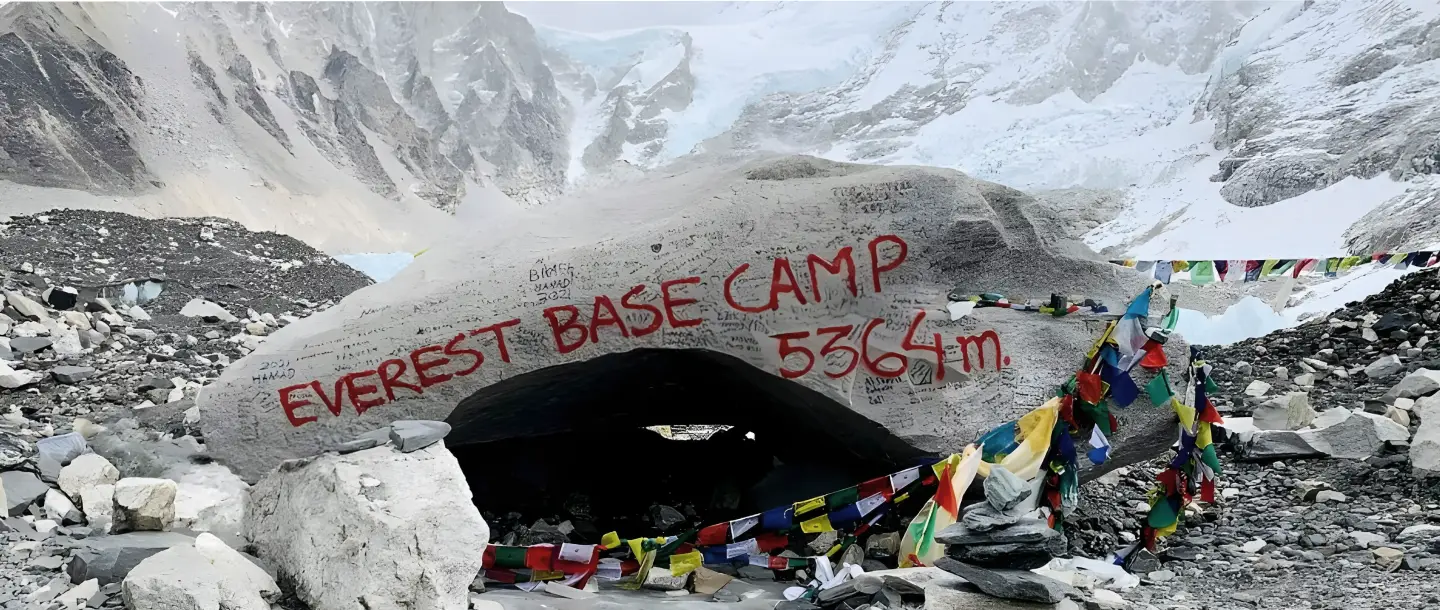
Everest Base Camp Trek: The Complete 2026 Planning Guide
Why Every High-Altitude Trekker Needs These Two Life-Saving Tools (And How to Use Them Properly)
Acclimatiation Process to make your trip successful
