Lobuche Peak Exped

Trip Difficulty: Moderate

Trip Days:16

Max Elevation: 6090m

Daily Activity: 6-7 hours Trek

Trip Starts: Lukla

Trip Ends: Lukla
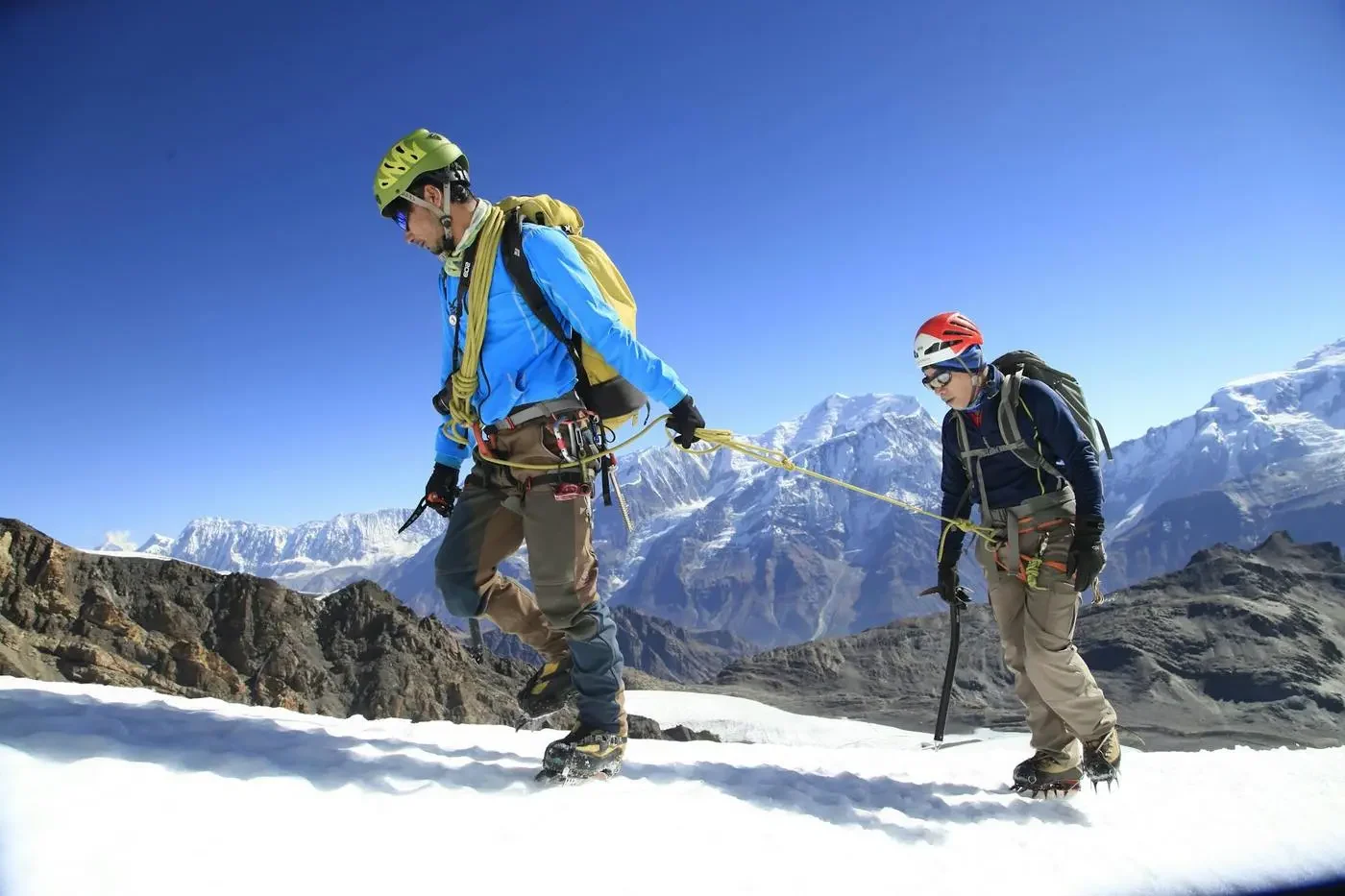
Lobuche Peak Climbing is one of the most rewarding 6,000-meter objectives in the Everest region because it blends two bucket-list experiences into one powerful Himalayan journey: the cultural trek along the legendary Khumbu trail and the excitement of a true alpine summit push. Lobuche East rises close to Everest Base Camp territory and is widely considered a premier “step-up peak” for trekkers who want more than viewpoints—people who want to wear crampons, clip into ropes when needed, and stand on a summit that feels unmistakably like a mountaineering achievement.
At Kudos Exped, we treat Lobuche East as a serious trekking-peak climb, not a rushed add-on. It is often marketed as accessible, but the mountain demands respect: you’re climbing to 6,119m, and the altitude alone changes how you breathe, how you sleep, and how your body recovers. The climb also includes steeper terrain on summit day, where most teams use a high camp strategy and rely on efficient pacing, rope discipline, and careful footwork.
There’s also a crucial detail that a good Lobuche article must explain clearly: Lobuche is not just “one peak.” It has two main summits—Lobuche East and Lobuche West. Lobuche East is the commonly climbed trekking peak, while Lobuche West is significantly more technical and typically falls under expedition-style requirements and diffferent route.
Why Climb Lobuche Peak with Kudos Exped?
A peak that feels “bigger” than its height
6,119m is already high, but what makes Lobuche East feel bigger is its setting. You’re climbing in the Khumbu—one of the most dramatic mountain landscapes on Earth—surrounded by serious Himalayan architecture and deep glaciated valleys. Many climbers choose Lobuche precisely because it delivers a mountaineering atmosphere without requiring the extreme technical skill of expedition peaks.
A perfect blend of Everest trekking culture and climbing intensity
Lobuche East typically follows the Everest Base Camp approach corridor to reach key acclimatization stops (Namche, Dingboche, and beyond). This means climbers get the full Sherpa village and monastery experience before shifting into the climbing phase. For many guests, this combination is what makes Lobuche memorable: you don’t simply arrive at a mountain and climb it—you journey into it through one of Nepal’s most iconic cultural landscapes.
A true training peak for future Himalayan goals
Many modern guides describe Lobuche East as a strong training objective for bigger mountains because it requires stamina, acclimatization, discipline, and basic mountaineering skills like crampon use and ice axe handling. With the right coaching and a patient itinerary, it becomes a confidence-builder: the climb teaches you how to move in alpine terrain at altitude—skills that transfer directly into more advanced climbing later.
Lobuche Peak Highlights
1) Stand on a 6,119m summit in the heart of the Everest region
Reaching 6,119m is not only a physical achievement—it’s a mental one. Above 6,000m, every step feels slower and heavier, and the summit is never “given.” Lobuche East rewards climbers who move steadily, control their breathing, and stay patient when the mountain demands time.
2) Experience a real summit push with an alpine start and a high camp strategy
Most Lobuche East climbs use Lobuche High Camp as the staging point for summit day, because it positions the team closer to the technical and steep upper sections. That high camp experience is part of the adventure: colder nights, thinner air, earlier wake-ups, and the unmistakable feeling that tomorrow is “the day.”
3) Climb in mixed terrain: rock, snow slopes, and glacier sections
Lobuche East is not a uniform snow dome. The summit push commonly includes a mix of rocky ground, glacier travel, and snow slopes that may require fixed ropes depending on season and route conditions. This variety is exactly why many climbers love Lobuche: it feels like real mountaineering rather than a single-style hike.
4) Earn views of Himalayan giants from a rare angle
One of Lobuche East’s biggest attractions is how close it is to the Everest amphitheater. Climbers often describe the surrounding skyline—Everest-region giants and sharp ridges—as a major reward of the climb. Whether you’re a photographer or not, the scale of the Khumbu landscape from high elevation leaves a strong emotional impression.
5) Combine it with Everest Base Camp for a complete Khumbu experience
Many climbers search specifically for “Lobuche Peak Climbing with EBC.” The pairing is popular because the EBC trekking route naturally builds acclimatization, and then Lobuche becomes the summit finale. Guides frequently describe Lobuche East as a peak that merges well with the EBC trail and its acclimatization profile.
Lobuche East vs Lobuche West: What You Must Know
Lobuche East is the commonly climbed trekking peak, and the summit most people mean when they say “Lobuche Peak Climbing.” It is challenging but achievable for fit trekkers with basic mountaineering training.
Lobuche West, on the other hand, is typically described as more technical and not treated like a standard trekking peak climb. It generally requires stronger technical ability and is often associated with expedition-style requirements and twice as economically higher ther Lobuche East Peak.
At Kudos Exped, when we publish “Lobuche Peak Climbing,” we mean Lobuche East (6,119m)—the classic, permitted trekking peak route that delivers a true summit experience in the Everest region.
Route Overview
Most Lobuche East programs begin with the flight to Lukla and follow the classic Khumbu approach. The route structure matters for two reasons: it builds acclimatization, and it builds confidence. Instead of arriving at a mountain cold, you arrive with days of altitude adaptation, trail rhythm, and a stronger awareness of how your body responds to elevation.
The trekking phase: building the base
The trek typically passes through major Sherpa hubs like Namche Bazaar and acclimatization zones such as Dingboche, gradually moving deeper into the Khumbu before reaching the Lobuche area. This part of the journey is where your endurance becomes stable, and your routine becomes efficient—walking pace, hydration, meal timing, and sleep pattern.
The climbing phase: shifting into mountaineering mode
From the Lobuche area, the focus shifts from trekking comfort to climbing readiness. Teams move toward high camp placement and skills preparation. The summit bid then involves mixed terrain and requires mountaineering gear such as crampons and ice axes.
What Lobuche Peak Summit Day Is Really Like?
A Lobuche East summit day is best understood as a long, controlled performance under thin oxygen. It begins early, it tests focus, and it demands discipline.
Early start, steady movement, zero rushing
Summit pushes usually begin before dawn, not for drama, but because conditions are typically more stable in the cold hours. Your first hours often feel slow. That’s normal. Altitude reduces power output. The correct response isn’t to fight it—it’s to commit to rhythm: step, breathe, step, breathe.
Technical sections: where coaching matters
Lobuche East commonly includes sections where fixed ropes may be used and where crampon technique becomes critical. Many first-time climbers realize on Lobuche that mountaineering is not about “strength only.” It’s about calm decision-making, stable foot placement, and efficient systems.
Descent: the half of the climb that determines safety
The summit is only the midpoint. Descent happens when fatigue is highest, and focus can drop. On snowy or mixed terrain, tired mistakes are the dangerous ones. A professionally guided climb treats descent as a planned phase with clear pacing, hydration, and timing—not a rushed victory lap.
Trek & Climb Difficulty: Is Lobuche Peak Climbing Hard?
Yes—Lobuche East is hard for most people. Not because it’s an extreme technical climb, but because it combines multiple stress factors:
Altitude is the main difficulty multiplier
At 6,119m, your body operates with significantly less oxygen. Even fit athletes can struggle if they don’t acclimatize properly. Multiple guide resources emphasize that Lobuche East demands stamina, acclimatization, and basic mountaineering skills.
Mixed terrain increases mental load
Trekkers are used to trail walking. Lobuche adds snow slopes, rock sections, and potentially rope-protected steep sections. This forces a different type of attention: you’re managing movement technique and safety systems while tired and cold.
The summit day is long and exposed
Even if the technical parts are manageable, the length of the day, combined with cold wind, makes the experience demanding. The climb rewards those who conserve energy early and avoid “spiking” their pace.
It’s achievable—with the right plan
Lobuche East remains popular because it is achievable for strong trekkers who train properly, respect acclimatization, and choose a responsible itinerary. That’s where Kudos Exped focuses: turning a hard climb into a structured, realistic objective.
Acclimatization: How to Climb Lobuche East Smart
Acclimatization is not an “extra feature.” It is the foundation of safety and summit success.
Why acclimatization matters more on Lobuche than on normal treks
On a typical trek, you can sometimes “push through” a tired day. On a 6,119m climb, pushing through the wrong symptoms is dangerous. The climb requires you to arrive at high camp in a state where you can still recover and sleep, because summit day requires reserves.
Key strategy: climb high, sleep low (whenever possible)
The best acclimatization schedules include daytime hikes to higher viewpoints and then sleeping lower. This stimulates adaptation without forcing your body to recover at maximum altitude.
Use acclimatization hubs properly
Most Everest-region acclimatization plans use stops like Namche and Dingboche as adaptation hubs before pushing higher. The goal is not simply reaching the next village—it’s arriving there with stable energy and minimal symptoms.
Hydration and eating are part of acclimatization—not optional
At altitude, dehydration happens faster because the air is dry and the breathing rate increases. Dehydration worsens headaches and fatigue. Likewise, low appetite is common, but you still need fuel—especially carbohydrates—for both trekking and climbing. A strong climber is often the person who eats and drinks consistently, not the person who tries to “tough it out.”
Best Time to Climb Lobuche Peak
Lobuche East is primarily climbed in spring and autumn because these seasons typically offer the best combination of stability, visibility, and manageable snow conditions.
Spring (March to May)
Spring is popular because temperatures are gradually warmer, and many climbers find snow conditions supportive for crampon movement. The Everest region is active in spring, which can help with logistics and lodge services, though it also means busier trails.
Autumn (September to November)
Autumn is famous for crisp visibility after the monsoon. The air often feels clearer and drier, and the mountain views can be exceptionally sharp. Nights can be colder than spring, but many climbers love autumn for the “clean” feel of the Himalaya.
Winter and monsoon (not ideal for most clients)
Winter can be extremely cold with more challenging conditions, and the monsoon can reduce visibility and increase weather disruption. For most climbers, spring and autumn offer the best balance of comfort and success chance.
Permits for Lobuche Peak Climbing
A credible trip page must explain permits in a way that is both accurate and flexible, because policies can be updated.
Sagarmatha National Park Entry Permit
The Nepal Tourism Board’s park fee table lists Sagarmatha National Park fees as NRs. 3,000 per person per entry for foreigners and NRs. 1,500 for SAARC.
Khumbu Pasang Lhamu Rural Municipality Trek-Card
The Khumbu Pasang Lhamu Rural Municipality’s official Trek-Card page lists service fees as SAARC countries and China: Nrs 2000 and Other Countries: Nrs 3000, issued at Tourist Information Centers (Lukla).
NMA Trekking Peak Climbing Permit (Lobuche East)
Lobuche East is treated as a trekking peak with an NMA permit requirement in many commercial programs. One detailed permit summary source states seasonal permit costs (example: USD 300 spring; USD 175 autumn/winter/summer) and also repeats the national park and local permit requirements.
Because permit fees can change, Kudos Exped processes permits using the latest official requirements close to departure.
Accommodation: Teahouses + High Camp
Lobuche Peak Climbing is a hybrid journey.
Teahouse trekking comfort on the approach
Most of the approach uses teahouse accommodation. Rooms are simple—twin beds, basic bedding, shared bathrooms in many locations—but they offer warm meals and a reliable daily rhythm. This teahouse system makes the Everest region uniquely accessible: you can focus on acclimatization and walking, without carrying expedition-grade camp logistics for the entire trip.
High camp: where the expedition feeling begins
Most climbers set up a Lobuche High Camp for summit positioning. High camp is colder, more exposed, and more functional. Sleep can be lighter due to altitude. This is normal. The goal at high camp isn’t luxury—it’s preparation: hydration, food, gear checks, and calm mental focus for summit day.
Food and Hydration on Lobuche Peak Climb
A strong Lobuche Peak article should tell clients the truth: food isn’t just “included”—it’s performance.
On trekking days
Teahouse menus in the Khumbu typically revolve around carbohydrate-friendly trekking meals: dal bhat, soups, noodles, rice dishes, potatoes, eggs, porridge, and tea. The best approach is consistency. Eat enough to recover daily, choose warm meals more often as you go higher, and treat hydration like a schedule rather than waiting for thirst.
On climbing days
Summit days demand simple, reliable fuel—foods your stomach accepts even at altitude. Warm drinks and soups are valuable because they hydrate and provide calories without digestive stress. Snacks should be easy and familiar. This is not the time to experiment with new energy products.
Training for Lobuche Peak: What Actually Works
If you want to rank for long-tail searches like “how to train for Lobuche Peak climbing” and “Lobuche Peak difficulty,” give readers a realistic preparation model.
Fitness baseline that matters
You should be able to hike for multiple days in a row, 5–7 hours daily, with a daypack, while still feeling capable the next morning. You don’t need sprint speed—you need endurance and recovery.
8–10 week preparation model (practical and doable)
Build training around:
- steady cardio (hiking/stairs/cycling/running at a conversational pace),
- leg strength (step-ups, squats, lunges, deadlifts),
- and core stability (because balance matters on mixed terrain).
The simplest “best training” for Lobuche is regular uphill hiking with a pack, because it prepares both your lungs and your legs for sustained climbing rhythm.
Skills that reduce summit-day stress
Lobuche East often involves crampons and ice axes, and sometimes fixed ropes depending on conditions. You don’t need to arrive as a technical climber, but you should arrive ready to learn. A good expedition includes instruction and practice—because skill familiarity turns summit day from scary to structured.
Safety, Risk, and Responsible Climbing
A trustworthy trip page must say this clearly: Lobuche East is a serious mountain environment. It is commonly climbed, but it’s not risk-free.
Key risks
Altitude illness, cold exposure, fatigue-based mistakes, and weather shifts are the biggest factors that determine success and safety. The mountain also includes mixed terrain where a slip can have consequences.
What responsible guiding looks like
Responsible guiding means:
- acclimatization that prioritizes health over speed,
- conservative turnaround rules,
- clear rope and movement systems when terrain demands it,
- and a strong plan for dealing with weather changes.
At Kudos Exped, we measure success by safe return first. The summit is the goal, but safety is the rule that governs every decision.
FAQs
Is Lobuche Peak Climbing suitable for first-time climbers?
Lobuche East is often chosen by first-time climbers who already have strong trekking fitness and are ready to learn basic mountaineering skills. It still demands stamina and acclimatization discipline.
What’s the difference between Lobuche East and Lobuche West?
Lobuche East is the commonly climbed trekking peak, while Lobuche West is significantly more technical and generally treated as an expedition-style objective.
Do I need technical climbing experience?
Not necessarily, but you must be comfortable learning and using mountaineering gear such as crampons and an ice axe, and potentially fixed-rope movement depending on conditions.
Which permits are required?
Commonly required permits include the Sagarmatha National Park entry permit and the Khumbu municipality Trek-Card, plus the NMA climbing permit for Lobuche East.
Conclusion
Lobuche Peak Climbing (Lobuche East, 6,119m) is one of the most complete high-altitude adventures in Nepal because it gives you the full Everest-region experience—Sherpa culture, legendary trails, dramatic alpine valleys—and then takes you beyond trekking into real mountaineering terrain.
It is a challenging climb, but it’s achievable for well-prepared trekkers who respect acclimatization, train for endurance, and commit to steady, disciplined summit-day movement. With the right itinerary design and responsible guiding, Lobuche East becomes more than a summit—it becomes a defining Himalayan milestone.
At Kudos Exped, we recommend Lobuche East to climbers who want their first 6,000-meter peak to feel meaningful: not rushed, not exaggerated, and not treated like a checklist—just a properly guided Himalayan climb where every step toward the summit is earned, safe, and unforgettable.
Standard Lobuche Peak Exped 6119m Itinerary
Things Included in Trip cost
Things Not Included in Trip cost
Lobuche Peak Exped 6119m Trek MAP
Book Now
💬 Talk to Ang on WhatsApp
Join fixed Departure with Ang
Departing Dates
and Price
Availability
15 April, 2026 - 30 April, 2026
$ 2200
1
Must Know Before your Trip

Why Every High-Altitude Trekker Needs These Two Life-Saving Tools (And How to Use Them Properly)
Acclimatiation Process to make your trip successful
Why Trekkers Fail to Reach the Final Point in Nepal
Nepal Visa Information 2025: Complete Guide for Trekkers & Travelers