
Why Every High-Altitude Trekker Needs These Two Life-Saving Tools (And How to Use Them Properly)

Personal experience and insights from high-altitude safety research
After years of watching fellow trekkers make preventable mistakes at altitude, I’ve become passionate about sharing two simple but critical tools that could save your life on your next mountain adventure. Today, I want to talk about something that costs less than a good pair of hiking socks but could mean the difference between summiting safely and becoming an evacuation statistic.
The Reality Check Most Trekkers Need
Here’s the uncomfortable truth: you’ll spend thousands on your dream trek, invest months in training, and research every piece of gear except the one device that could actually save your life.
I’m talking about a pulse oximeter and understanding the Lake Louise Score system.
These aren’t fancy gadgets or complicated medical procedures. They’re simple, practical tools that give you objective data when your body starts lying to you at altitude—and trust me, it will lie to you.
What Exactly is a Pulse Oximeter?
A pulse oximeter is a small device that clips onto your finger and measures two crucial things:
- SpO₂ (Blood oxygen saturation) – the percentage of oxygen in your blood
- Pulse rate – your heart rate
The technology is elegantly simple: it uses infrared and red light to measure the difference between oxygenated and deoxygenated blood in your vessels. The device essentially “sees” how much oxygen your blood is carrying by analyzing how these different light wavelengths pass through your finger.
At sea level, your SpO₂ should read 95-100%. But as you climb higher, those numbers will drop—and that’s where things get interesting (and potentially dangerous).
How to Use Your Oximeter for Accurate Results
Getting reliable readings isn’t just about clipping the device on your finger. Here’s the proper technique I’ve learned through trial and error:
Step 1: Prepare Your Finger
Rub your finger for 30 seconds to warm it up. Cold fingers give inaccurate readings, and at altitude, your fingers are often cold.
Step 2: Rest First
Sit quietly for 5-10 minutes before taking a reading. Your heart rate and oxygen levels fluctuate with activity, so you need a stable baseline.
Step 3: Remove Obstacles
Take off nail polish, especially dark colors. The oximeter needs clear light transmission through your nail bed, and polish can interfere with the sensors.
Step 4: Insert Properly
Insert your finger fully into the device—not just the tip. The sensors need to align properly with your nail bed and finger pad.
Step 5: Take Multiple Readings
Don’t trust a single reading. Take three measurements and average them. If there’s a big variation, something’s wrong with your technique.
Step 6: Avoid Direct Sunlight
Strong UV rays can interfere with the light sensors. Take readings indoors or in shade for best accuracy.
The Critical Truth About Data vs. Symptoms
Here’s something vital that many guides don’t emphasize enough: your pulse oximeter is a diagnostic aid, not a doctor. Your body’s symptoms are more important than any number on a screen.
Let me give you two scenarios that illustrate this perfectly:
Scenario 1: Low Reading, Good Feeling
You’re at 4,200 meters, your oximeter reads 60% SpO₂, but you feel fantastic—no headache, good appetite, sleeping well. In this case, your oximeter is probably malfunctioning or you’re using it incorrectly. Re-check with proper technique or a backup device.
Scenario 2: Good Reading, Terrible Feeling
Your oximeter reads 96% SpO₂ at 4,200 meters (which would be excellent), but you’re vomiting, have a splitting headache, and can’t keep food down. Ignore the oximeter—listen to your body and descend immediately.
The key takeaway? Use the oximeter to confirm what your body is telling you, not to override it.
Understanding the Lake Louise Score System
The Lake Louise Score (LLS) is an internationally recognized system for diagnosing and quantifying acute mountain sickness (AMS). It’s essentially a simple questionnaire that puts numbers to how you’re feeling.
The system works best above 2,500 meters and evaluates five key symptoms, each scored from 0-3:
- Headache (0 = none, 3 = severe and incapacitating)
- Gastrointestinal issues (0 = good appetite, 3 = severe nausea/vomiting)
- Fatigue and weakness (0 = not tired, 3 = severe fatigue)
- Dizziness (0 = none, 3 = severe dizziness)
- Sleep difficulty (0 = slept well, 3 = couldn’t sleep at all)
Interpreting Your Lake Louise Score
Once you’ve scored each symptom, add them up:
0-2 points: You’re doing great—no altitude sickness. Continue with normal precautions.
3-6 points (with headache present): Mild AMS. This is your yellow light. Stop ascending, rest, hydrate, and focus on acclimatization. Don’t go higher until symptoms improve.
7-9 points: Moderate AMS. This is your red light. Descend 300-500 meters immediately and reassess.
10+ points: Severe condition requiring immediate descent of at least 1,000 meters. This isn’t negotiable.
The Power of Combined Assessment
Here’s where it gets really practical: you should never use either tool in isolation. The magic happens when you combine your pulse oximeter readings with your Lake Louise Score.
This dual approach gives you:
- Objective physiological data (SpO₂)
- Subjective symptom assessment (LLS)
- Comprehensive picture of your altitude adaptation
For example:
- SpO₂ of 85% + LLS of 2 = probably okay to continue with caution
- SpO₂ of 90% + LLS of 7 = descend regardless of the good oxygen reading
- SpO₂ of 78% + LLS of 1 = take a serious rest day and monitor closely
My Daily Assessment Protocol
Based on my experience and research, here’s the routine I recommend for any trek above 2,500 meters:
Morning Assessment (Every Day)
- Wake up and sit quietly for 5 minutes
- Take three oximeter readings and average them
- Complete your Lake Louise Score assessment
- Record both numbers in your trek log
- Make your decision about the day’s activities
Evening Check
- Repeat the oximeter measurement before bed
- Note any significant changes from morning
- If readings have deteriorated, consider modifying tomorrow’s plans
The Documentation That Could Save Your Trek
I’ve created a simple daily tracking sheet that combines SpO₂ readings with Lake Louise Scores. This isn’t just data collection—it’s pattern recognition that helps you understand how your body responds to altitude over time.
The tracking helps you:
- Identify your personal altitude adaptation patterns
- Make informed decisions about rest days vs. ascent days
- Communicate clearly with guides about your condition
- Provide valuable data if medical consultation becomes necessary
Why This Matters More Than You Think
Every year, I see preventable altitude-related emergencies. People who invested thousands in their dream adventure but skipped the $50 oximeter. Trekkers who could have prevented serious illness by understanding their Lake Louise Score.
The tools I’m sharing aren’t just about safety—they’re about confidence. When you have objective data about your condition, you make better decisions. You push when it’s safe to push, and you rest when rest is needed. You complete your trek instead of becoming another “almost made it” story.
Getting Started
If you’re planning any high-altitude adventure:
- Invest in a quality pulse oximeter designed for altitude use (look for devices tested above 10,000 feet)
- Practice using it at home so you’re comfortable with the technique
- Learn the Lake Louise Score system before you leave
- Create a daily tracking routine and stick to it religiously
The Bottom Line
These tools won’t prevent altitude sickness—proper acclimatization, hydration, and gradual ascent do that. But they will help you recognize problems early and make informed decisions about your safety.
Your pulse oximeter and Lake Louise Score assessment are like having a conversation with your body in a language you both understand. And at altitude, that conversation could save your life.
Want the complete tracking sheet I mentioned? It combines daily SpO₂ readings with Lake Louise Scores in an easy-to-use format that fits in your pack. Message me for the printable version that’s helped hundreds of trekkers make safer decisions on their adventures.
Have you used a pulse oximeter on a trek? Share your experience in the comments below—I’d love to hear how these tools have helped (or could have helped) your mountain adventures.
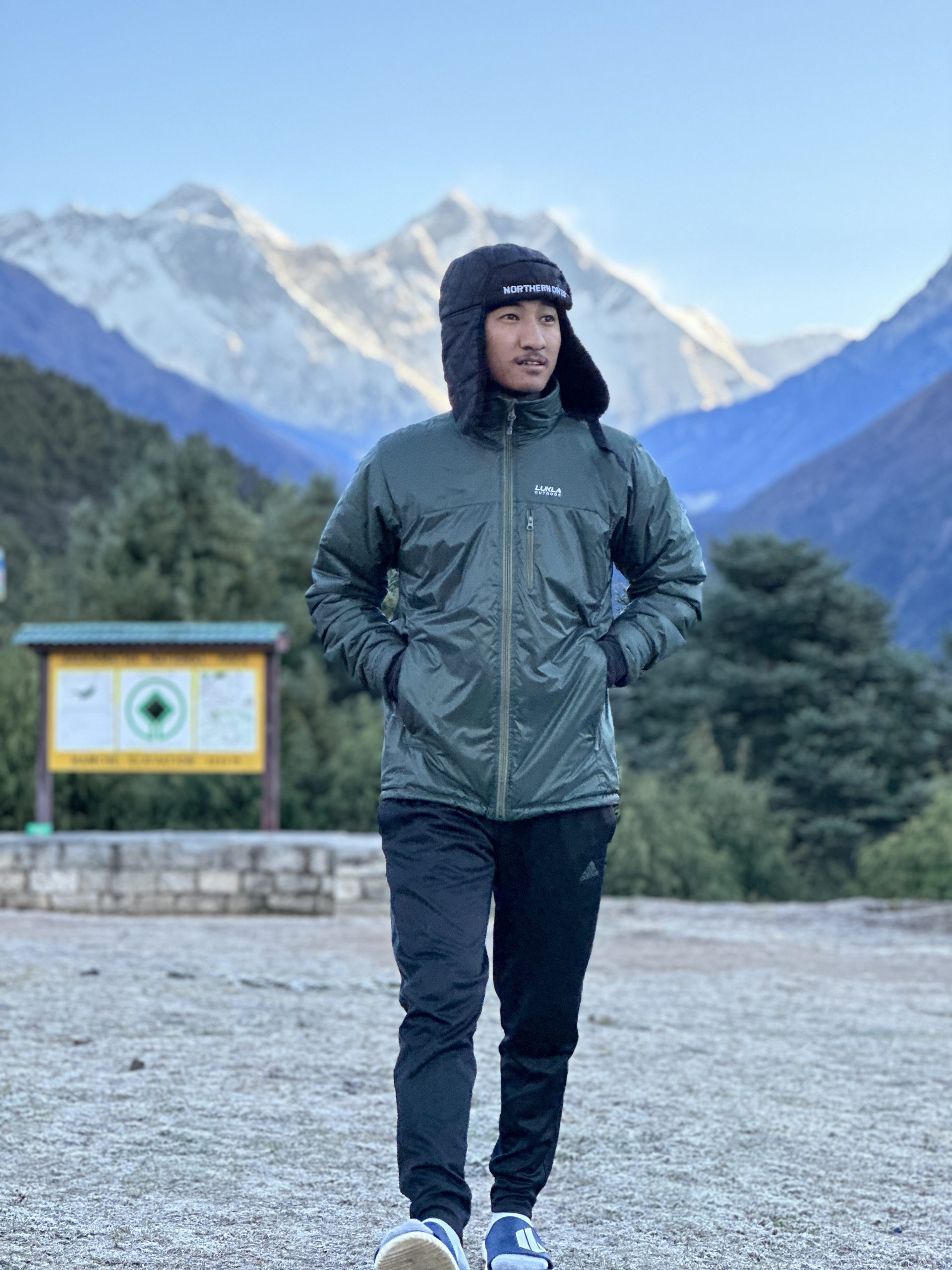
Hello, I'm Ang Tsering Sherpa. For the past 26 years, I've been immersed in the tourism industry, following a path shared by generations of my Sherpa family. With pride, dedication, and a deep-rooted passion, we Sherpas have dedicated ourselves to leading travelers along Nepal’s trails and mountains.
Know More